
Quad Cities Solar Shades: Cut River Glare, Keep the View
You can cut the river glare without losing the view. If your house sits on the Iowa side of the river here in the Quad Cities, solar shades are the first thing I'd look at. They filter the sun instead of blocking it. You still see the water and the bridges through the weave. The hard flash off the river turns into a soft glow.
Why river windows get it twice
The Mississippi runs east to west through here, so on the Iowa side your river view faces south. That's the side of the sky the sun crosses all day. Our season-by-season guide walks through what that means over a whole year.
You get the sun once through the glass and again off the water. On a calm day the river works a lot like a mirror. Stand in the middle of the I-74 bridge trail on a sunny afternoon and look south. The whole river lights up. Your living room sees the same thing.
The worst of it comes in spring and fall, not July. In June the sun climbs high and the roof overhang blocks a lot of it. In March, and again from September on, the sun runs low even at midday. It slides under the overhang and reaches deep into the room, onto the floor, the couch and the TV. Most folks don't mind that warm light on a chilly March day. I don't either. What they mind is a white flash across the TV during the game.
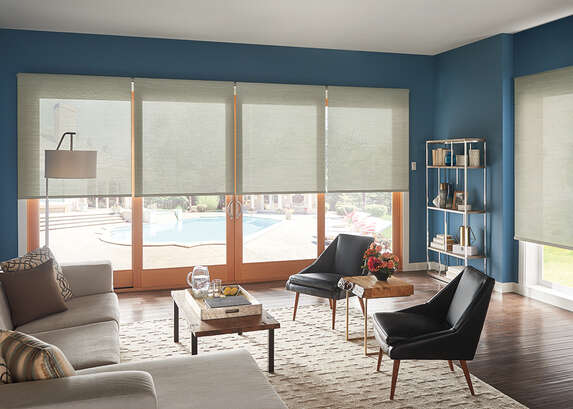
Picking a solar weave for a south window
Solar fabric is a woven screen on a roller. The weave has tiny openings, and by day you look out through them a bit like looking through good sunglasses. Go looser and the water stays sharp. Go tighter and you cut more glare and get more privacy and UV protection, but the river looks dimmer.
On a south-facing river window, I'd usually start with a medium openness. Your roof overhang already blocks a lot of the high summer sun, so you don't need the tightest weave. In the room with the TV, I'd go a step tighter. That's where the glare does the most damage. The kitchen and dining area can go a step more open. You want the light at breakfast, and nobody's watching a screen.
You do have to see it, though. Two weaves that look the same in your hand can look very different against a bright river. You can look over the fabric options on our solar shades page first, but I wouldn't pick from a screen. When we come out, we'll hold a few weaves up against your own river view at the hour the glare is worst.
Big glass, bedrooms and privacy after dark
River homes tend to have big windows, and sometimes a whole wall of them. Most solar fabric comes in wide widths. So a big picture window can often get one shade instead of two or three pieced together. Across a whole wall of glass, keep the same fabric and the same mount on every window. Then it looks like one big window instead of a patchwork. On tall glass, motorized is worth it. One button lowers the whole wall. You can add a sun sensor so the shades come down when the afternoon glare shows up.
A solar shade only hides you while it's brighter outside than in. Once the lamps are on, anyone outside can see right in. A lot of Iowa-side river windows face the water instead of the neighbors, which helps. But boats go by, and there are trails and parks along much of the river. For a living room you use at night, drapes you pull after supper are the simplest answer.
Bedrooms are different. A solar shade won't get the room dark enough to sleep, so I'd skip it there. I'd use a dual roller instead: a light-filtering shade for the daytime and a blackout shade right behind it for night, each on its own roller.
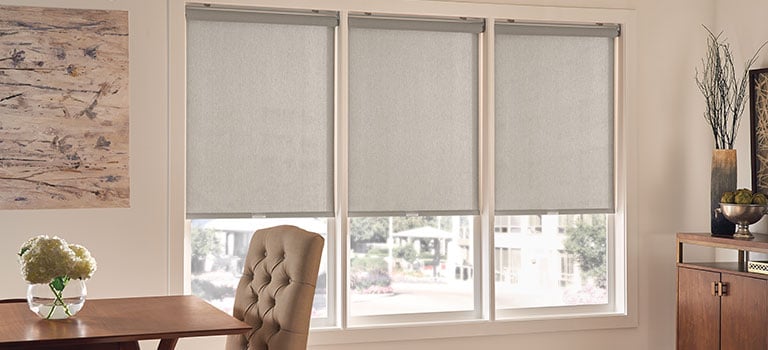
The heat, and the deck
A solar shade helps with heat a little. Not as much as people hope, though. It catches the sun before it hits the couch and the floor. So the room doesn't soak up as much on a sunny afternoon. If you want more than that, drapes with a thermal lining add a real layer between the room and the glass. A solar shade mounted on the outside of the window does even more. The sun hits fabric before it ever reaches the glass.
The deck or porch is its own case. If yours faces the river and gets too hot to sit on by mid-afternoon, outdoor shades are made for that. You pick the openness so the water still shows through. With them down, late afternoon on the porch gets a lot nicer.
The Illinois side, and getting started
If you're on the Illinois side, your river view faces north and the job flips. Glare matters less. Cold glass and dim winter light are the bigger ones. Our post on cellular shades for Moline and Rock Island winters covers that side.
Our home page has more on solar shades in the Quad Cities. If you'd like us to look at the river side with you, the in-home consultation is free. We measure extra-wide windows and whole walls of glass all the time, so don't worry about the size.
If you're reading this in July and the glare doesn't seem so bad, that's the high summer sun doing its job. Give it until late September, when the low sun comes back under the overhang. Judge your weave then, at the hour the glare is worst.
Kevin Sill is CFO and co-owner of the family-owned Budget Blinds franchises serving the Quad Cities.