
Wood Blinds in Davenport: One River Window Through Late Fall
Say your living room sits on a McClellan Heights ridge, with a big window looking south through the trees toward the river. All summer the leaves did the shading for you. Once they drop, wood blinds in a Davenport house like that have to take over the trees' job. By day, a partway tilt can cut the bounce off the water and still keep the room bright.
Before the leaves dropped, the trees did the work
McClellan Heights was built on hills and ravines. Its National Register nomination describes houses on the ravine roads set "high above street level along ridge crests." It also calls much of the district heavily wooded, especially toward the river end.
All summer that mix of height and trees made things easy. The leaves filtered the sun before it got to your glass. They also hid you from the cars and walkers down on the winding street. It was easy to leave the blinds open all season and never think about them.
The trouble is that the trees were doing two jobs, and as the canopy thinned this fall they quit both at once. You started to see water through the branches. It's a lovely view, and it also brings glare.
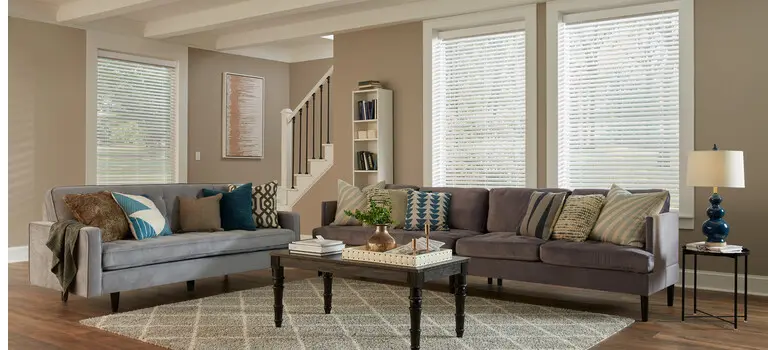
Cutting the bounce off the river
The river sits south of and below a ridge window, so sunlight hits the water and bounces up toward the house. That reflected light comes in low from below and lands on the ceiling, the TV screen and your eyes. A plain blind pulled all the way up can't help with it, and a blind closed flat kills the view.
Tilt instead. Turn the wand slowly and watch the ceiling and the screen. At some point partway closed, the slats catch the bright bounce while open sky still lights the room. That's your daytime setting for that window.
Before you pick a blind, stand at your window on a sunny afternoon and turn a sample in your hand. You'll see in a minute which angle kills the river glare.
November and bare branches: how to tilt blinds for privacy
Once the leaves are down, the street can see you. On a ridge, the people looking in are usually below the window. The easiest way to set a privacy tilt is to check it from outside. Set the slats the way you like them for the glare. Then walk down to the street at midday and look back up at the window. If you can make out the room, nudge the wand a little and look again. Two or three trips and you know the setting for good.
After dark is simpler. It's dark by dinner now, so close the slats all the way when the lamps come on. Closed wood blinds are private, though a little light still shows at the edges and between the slats. If that bothers you in a bedroom, ask about the routeless option because it blocks more light.
Want the rest of the year mapped out too? Our guide to what river-town windows need in each season picks up from here.
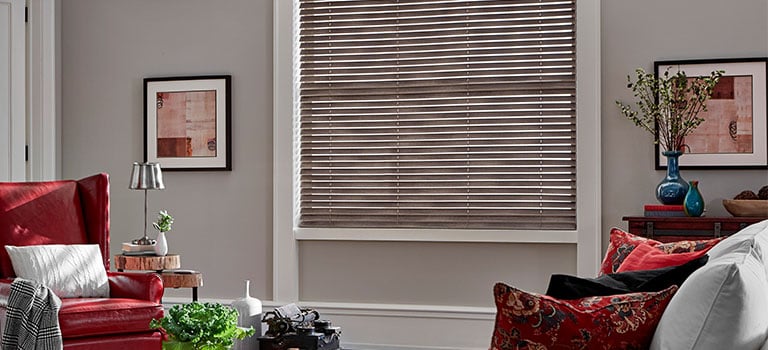
Wood or faux wood blinds for a south river window?
For most river rooms, I'd pick real wood. It's warm next to old oak floors and original trim, and it also comes in a 2 3/8 inch slat. I like that middle size when 2 inches looks busy and 2 1/2 looks chunky. Our wood blinds come in painted, stained and rustic finishes. We bring samples of each to the free in-home visit, so you can see them against your own trim.
There's one catch. Real wood can warp with long hours of strong direct sun. A south window with no trees left in front of it gets low winter sun most of the afternoon. If yours bakes like that, I'd go faux wood on that one window. Faux wood is a polymer with UVA inhibitors, so it handles that sun better. From the street, most people can't tell them apart.
Faux wood also belongs anywhere wet. That means the kitchen and the baths. It also means a lower level dug into the slope, if your house has one.
One look I'd skip in an older house is a stark white blind against dark original trim. A warmer white or a stain close to the trim sits better. Our blinds come cordless. A motor can take over the tilt on a tall window that's hard to reach.
December to February: a simple daily routine
By midwinter the routine gets simple. In the morning, set the glare tilt and leave them. When the sun drops low in the afternoon and comes straight in, close the slats on that window for an hour. At dusk, close every street-side window.
Tonight, close the blinds on that river window and hold your hand near the glass at the edge of the frame. If it feels cold, blinds may not be the right tool there because slats tilt but they don't seal. For that spot, cellular shades for river rooms on the Illinois shore covers the warmer option. When you're ready, there's more on wood blinds around Davenport and how to book on our home page.
Kevin Sill is CFO and co-owner of the family-owned Budget Blinds franchises serving the Quad Cities.