
Which Okatie Windows Need Motorized Blinds Near Hilton Head?
Not every window needs a motor. In a home near Okatie, I'd put one on the windows you can't reach. I'd add the ones you'd adjust all day if it didn't mean a trip across the room. Then the ones stuck behind furniture. Everything else can stay cordless. I'd use that same short list for motorized blinds in most homes around Hilton Head.
Which windows earn a motor
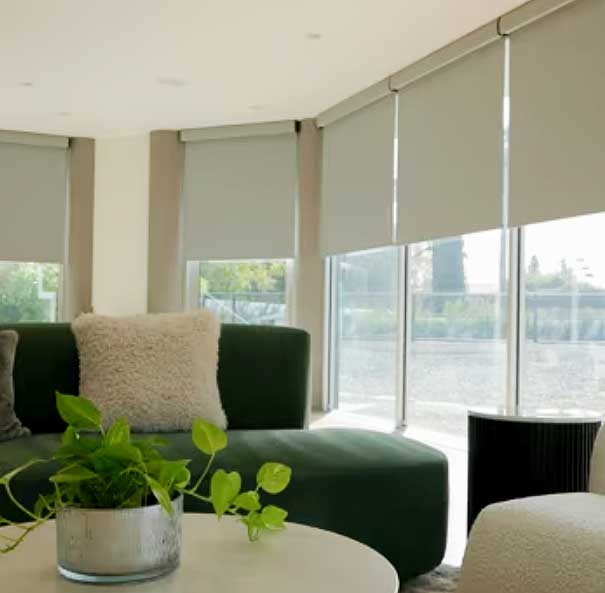
If your great room looks out over marsh or open water, a lot of its light bounces off the water. It's pretty, and it's also a lot of glare. August makes it harder. Highs are around 90 and the sun doesn't set until around 8. A west-facing great room gets hours of low sun every evening.
Now picture that glare on a two-story wall of glass. Nobody climbs a ladder to lower the upper shades at 5. They either stay down all day or never come down at all. Those top windows are the first ones I'd motorize, along with transoms over doors. The low evening sun comes through the lower windows too, but you can reach those by hand. The windows facing the marsh or the west come next. Those have to come down in the afternoon and go back up later, every single day. After that, look at anything behind furniture, like the window behind a big sectional.
A bedroom window at waist height doesn't need help. A cordless shade does fine there. If grandkids visit, cordless is the right call anyway.
Who runs them: you, a guest or a schedule
Think about who will actually move each shade. In a lot of island and Bluffton homes, that's you most days. Family visits on the holidays, and some weeks nobody's home at all. Each of those wants something different.
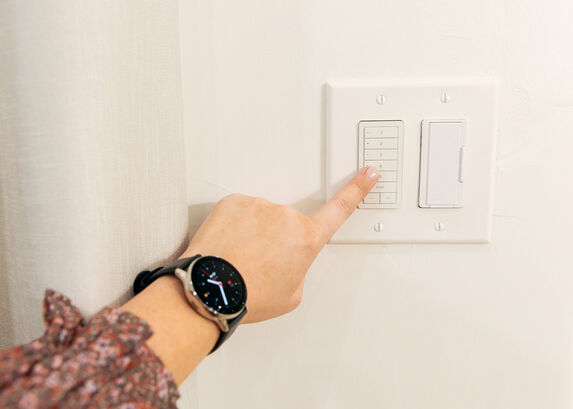
For you, the app is the most useful piece. It holds schedules and scenes, and it can time the shades to sunrise and sunset. A sun or temperature sensor is an option too, so the shades react to the light on their own. For guests, put a wall switch by the door of the room. People understand a switch without being told, and nobody has to download anything. A hand-held remote or a motorized wand at the shade's outer edge covers the rest. They also work with the popular voice assistants and smart home systems if you already talk to a speaker. Our guide to the easiest window coverings to use has more on picking controls everyone can use.
Blinds and shades move a little differently. On a motorized blind, the motor's main job is tilting the slats. On a marsh window that's handy, because you can angle the slats to cut glare and still see the water between them. They come in wood, faux wood, composite and more. In a humid room I'd lean toward faux wood or composite. A motorized shade goes up and down as one piece of fabric. That's what I'd use on big spans of glass. A solar shade on a motor cuts the glare and keeps the view.
Are motorized blinds reliable?
For everyday use, yes. The key is getting them installed and set up right. That's why professional installation is recommended for motorized products. Our own team does ours, and we show you the controls and check that every motor works before we leave.
Some motors run on a battery pack and some can be wired in. We'll tell you which you're getting on each window. Lose a remote and the app or a wall switch still runs the shade, if you have one of those set up too. Schedules get set in the app, and we'll show you how before we leave.
There are real downsides. The install is more involved than a cordless shade. Plan on a visit, not a weekend project. Ask how long the batteries should last on the motor you pick, since a battery motor needs a little upkeep. Schedules and scenes take a little setup. And a window you'd rarely touch doesn't need a motor.
Older shades, the porch and a day on a schedule
Already have shades you like? A motor can be added to some of the blinds and shades you already have. You may not need to replace them. If your home sits empty part of the year, a schedule keeps the shades working while you're gone. Our Hilton Head second-home window checklist covers that.
If a screened porch or lanai faces the marsh too, the late sun hits it as hard as the great room. Outdoor shades help there, and on a long porch I'd motorize them. One button raises the whole run when the weather turns rough, which is when outdoor shades should be up anyway.
On a west-facing great room over the marsh, a schedule might run like this. In the morning the shades are up, and the marsh is wide open while you have breakfast. By late afternoon the sun is low and coming straight in, and the shades come down before the glare hits the sofa. At sunset they can go back up so you catch the last color over the water. If the room faces a neighbor or the road, they stay down instead.
Motorized shades make more sense once you push the button yourself. You can try them at our Bluffton showroom, or we'll bring the controls to a free in-home consultation. We put in motorized blinds on Hilton Head, in Okatie and across Bluffton. We're happy to start with just the great room.
Kevin Sill is CFO and co-owner of the family-owned Budget Blinds franchises serving Hilton Head Island and Bluffton.