
Window Blinds on Hilton Head Island for Low Winter Sun
In winter, the low sun bouncing off a marsh or a lagoon can be brutal. The sun rides low all day, and the water throws that light straight back into the house. That's why I'd pick window blinds on Hilton Head Island one window at a time. Faux wood goes on the sunny water side. Real wood goes in the drier rooms you want to feel warm, and vertical blinds go on the wide sliders.
Which window gets the worst glare off the marsh?
The island has both freshwater and tidal wetlands, and the Town counts them as a core part of its ecosystem. If your house backs onto a pond or the marsh, the glare works like this.
In summer the sun is high, and most of that light lands on your roof and your porch. In December it stays low in the southern sky all day. By afternoon it comes in from the southwest, nearly level with the windows. Then the water adds a second dose. Light hits the surface and bounces back up at the glass, which wears on your eyes after an hour or so.
The tide sets how much water there is to bounce off. At NOAA's tide station on the island, the water rises and falls about 6 feet on an average tide. A marsh that looks like grass and mud at low tide can be a sheet of water a few hours later. So judge a marsh-side room on a sunny afternoon near high tide before you pick a blind for it.
The worst of it comes late in the day. The last couple of hours before sunset are when a west room gets hard to sit in.
Blinds help because the slats tilt. You can angle them against the low sun and still keep part of the view. How much view you keep depends on the window. That's why at our free consultation we look at which way each room faces before anyone talks about materials.
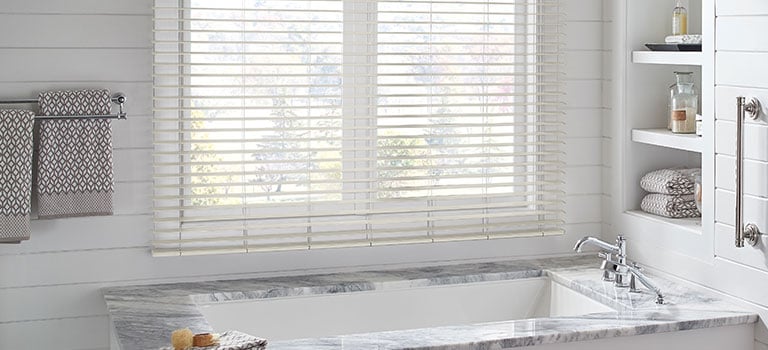
Faux wood blinds on the sunny water side
For a west or south window that faces the water, I'd pick faux wood. The polymer has UVA inhibitors, so it resists cracking and peeling in strong sun. Real wood can warp in direct sun and in damp air, and a marsh-side window gets plenty of both. Faux wood doesn't mind either.
It suits a second home too. If the house sits closed for weeks, the blinds on the sunny side can stay tilted shut and take the sun on the slats instead of your floors. They wipe clean with a damp cloth when you come back. The second-home window checklist has more on setting up a house for the weeks you're away.
On a big view window I like the 2 1/2 inch slat better than the 2 inch. It's a bolder look and suits a wide pane of glass. Faux wood is my pick over the kitchen sink and in the baths too, wherever they sit in the house.
Wood blinds for the rooms you want to feel warm
Real wood still has a place in an island house, as long as it goes in the drier rooms away from the hottest glass. A study, a dining room or a bedroom that faces north or east is a good fit. Those rooms are away from steam, and the sun never sits on the slats for hours.
Wood brings something faux wood can't quite match. The grain is richer up close, and a stain can match your floors or your cabinets. You can also go painted or pick a rustic finish. Slats come in three sizes, from 2 inches up to 2 1/2.
The Town keeps more than 72 miles of public pathways for walkers and cyclists. If a wood blind faces the street or one of those paths, close the slats once the lamps come on. Closed slats keep the room private.
| Window | My pick | Why |
|---|---|---|
| West or south glass over water | Faux wood | Handles strong sun and damp air |
| Study, dining room, north bedroom | Real wood | Richer grain in a dry room |
| Wide slider to the lanai | Vertical blinds | Draws aside like the door |
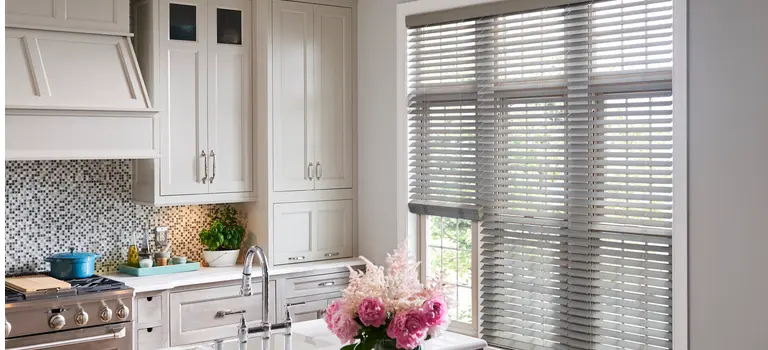
Vertical blinds for wide sliders facing the water
If your house has a wide slider out to the porch or lanai, a horizontal blind that wide is heavy to raise. You'd also have to raise it every time you walk out. Verticals fix both. They draw to the side like the door does and stack neatly out of the way.
They handle side light well too. Late-day sun slants in from the side. Vertical vanes turn on a wand, so you can rotate them to block light from one side and still see straight out to the water. On a southwest slider that keeps most of the view and cuts most of the glare.
Vertical blinds look a lot better than the ones many of us grew up with. You can pick fabric or textured vanes, wood grain finishes or an S-shaped vane that hangs more like a drape. The vane choices are on our vertical blinds page. They can draw left, right or split from the middle. On a door guests use, have the vanes stack on the side with the fixed pane of glass. The half that slides open then stays clear. Stuck on the slider? Our post on sliding glass door blinds for a Bluffton lanai goes through the other door options. Our guide to easy window coverings has more on controls anyone can use.
Pick the material before the brand
People often wonder which brand of blind is best. The right material for the window matters more than the name on the headrail. A good blind in the wrong material will still let you down on a hot marsh-side window. So settle the material window by window, then choose the color. Color and fit are what we work on all week for window blinds on Hilton Head Island.
Kevin Sill is CFO and co-owner of the family-owned Budget Blinds franchises serving Hilton Head Island and Bluffton.