
Guests Sleeping In? Blackout Shades in Iowa City
The guest room gets the least thought and some of the hardest work. Company stays up late, then tries to sleep past sunrise next to a streetlight or a bright snowy yard. For that room I like blackout shades with the edges closed off, hung outside the frame when the trim allows. Around Oxford and Iowa City, closing the edges helps a guest sleep more than a darker fabric alone.
Who's sleeping in, and when does the light get there?
Some guests pull in late and tired after a long drive. Others want to be on the road before it's light out.
Some visits stretch out for weeks. A college kid home for a month or a teenager with no school the next day can sleep until ten without trying. That late sleeper is the one the shade has to work for. Grandparents often want the opposite, with the room dim by eight at night.
In winter the sun comes up late. That sounds like it would help. Most guests are still asleep well after it's light, though. By then a low sun can shine straight into an east or south window. Fresh snow in the yard throws more light at the glass too.
Night brings its own light. A yard light or a streetlight by the driveway can shine in all night. Oxford sits right off Highway 6 and I-80, so a guest room on the highway side may see headlights sweep the ceiling. A light-filtering shade does very little against any of that.
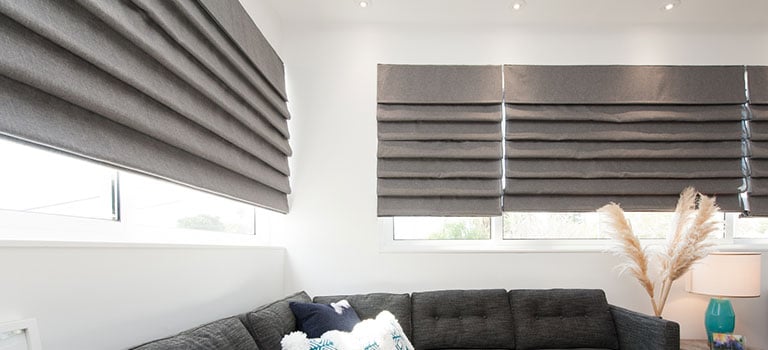
Room darkening vs blackout: what's the real difference?
Both fabrics block a lot of light. Room-darkening fabric dims a room well, but a faint glow still comes through the cloth on a sunny morning. Blackout fabric is dense enough that almost nothing gets through the material itself.
For a guest room I'd go blackout. The people sleeping there didn't pick the room, and they may be on a different clock than you. A teenager's room or a home office can be fine with room darkening. A guest who just flew in from two time zones away probably won't be.
A darker fabric won't fix the edges. Even the densest blackout fabric leaves a thin line of light where the shade meets the frame. On a gray morning you may not notice it. When the sun hits fresh snow, those lines make a bright outline around the shade.
Where does light get around a blackout shade?
Mostly at the sides, then the top. The bottom matters least.
A shade mounted inside the window frame needs a small gap at each edge so it can move freely. Light comes straight through that gap. There are two good fixes. The first is side channels, slim tracks that run down each edge and hold the fabric in. Roller shades can add side rails, and cellular shades can add light guards or block-out channels. The second fix is an outside mount. Hang the shade on the wall above the window and let it run past the frame on both sides. An outside mount blocks more light than an inside one, so I lean that way in a guest room whenever there's wall space.
House age tips the choice in Oxford. Census estimates put about a third of the town's homes before 1940 (Census Reporter). If your frame is that old and shallow or a bit out of square, an outside mount covers both problems. About a fifth of Oxford's homes went up in the 2000s instead. Builder blinds won't darken a guest room, so plan on the full blackout fix there.
On an inside mount, light can also slip over the roll of fabric at the top. A cassette or a valance covers that gap. So does mounting the shade higher on the wall.
The bottom still shows a little. If the shade stops short of the sill, you get a bright band at the bottom. With an outside mount, let the shade run a bit past the sill so it overlaps.
Lined drapes can do the edge work too. Blackout-lined panels on a rod that runs past the frame cover the sides well. They also look softer in a room that's an office or a craft room the rest of the year. Over a blackout shade, they get the room about as dark as it can get. You can compare the options on our blackout shade page.
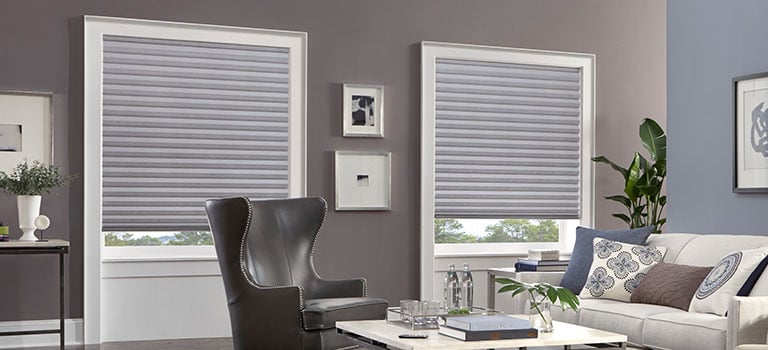
Which room should get blackout first?
Start with the room where someone sleeps the latest. Usually that's the guest room. In some houses it's the basement, where a sofa bed takes most of the overflow when family stays over.
Then look at which way the window faces. An east guest room gets the morning sun first, so it moves to the front of the line. A room with a streetlight outside comes next. A north room on a dark side of the house can often wait, and room-darkening fabric may be all it needs.
Kids give up their rooms when family stays over too. If a cousin is bunking in your daughter's room, think about what she needs the rest of the year. A cordless room-darkening cellular shade with channels works for both of them.
A guest room that doubles as an office has two jobs. A dual roller shade puts a light-filtering shade and a blackout shade on the same window. Each one goes up and down by itself. Work with the light-filtering one down. Pull the blackout down when someone's sleeping there. If the desk screen fights a bright window by day, our post on screen glare and solar shades covers that half of the room.
A checklist before company comes
Go into the guest room early on a sunny morning. Lower the shade, shut the door and give your eyes a minute to adjust. Then go down this list:
- Light along the sides of the shade means side channels or an outside mount.
- A bright line across the top calls for a cassette, a valance or a higher mount.
- A glow through the fabric means it's room darkening or light filtering, and blackout is the next step.
- A streetlight or yard light outside needs a second check after dark with the lamps off.
- A guest who can't figure out the shade needs a cordless one that lifts by the bottom rail.
- Old corded blinds still hanging should go first if kids will sleep in that room.
If company is already on the way, use what you have. Heavy drapes on the rod that's there now help a lot. Moving the bed so nobody faces the window helps too. Then plan the real fix before the next visit.
The rest of the house wants the opposite. The living room and kitchen want every bit of the short winter daylight, and keeping older rooms bright in winter shows how. We'll bring both kinds to the free visit. Hold them up in the guest room on a bright morning. When you ask about blackout shades in Iowa City, tell us which window your latest sleeper wakes up facing.
Kevin Sill is CFO and co-owner of the family-owned Budget Blinds franchises serving the Iowa City area.