
Faux Wood Blinds in Iowa City for Wet Winter Glass
Water on the glass behind a closed blind is normal on a cold Iowa morning. Warm and damp air from the house meets a pane that sat in the cold all night. It turns to water on the glass. A fabric shade pressed against that water can stain by spring. Faux wood blinds don't mind getting wet, and you just wipe them dry. That's why they're my usual pick for the wet windows in Iowa City and Coralville houses.
On a wet morning, open up and let the glass dry
Open the blinds once the sun is up. Light and warm room air dry the glass faster than anything else. Wipe the sill if water has pooled there, and dry the bottom slat while you're at it.
Then look at what's putting water in the air. Run the bath fan after a shower and the kitchen fan while you cook. Make sure the dryer vents outside. Some water on a frosty morning is normal. If it runs down onto the sill every day, the air inside may be too damp. The EPA suggests keeping indoor humidity between 30 and 50 percent. A small humidity gauge will tell you where you are.
Why the water collects behind the blind
It's the same thing that happens to a cold drink on a summer day. The air inside your house carries moisture from cooking, showers and breathing. When that air touches cold glass, the water comes out of it as condensation on windows and mirrors.
We're right in the season for it. At the Iowa City weather station only a handful of October nights drop below freezing, but more than half of November nights do. The glass is coldest just before dawn, so the wettest window of the day is the one you open first thing.
A closed blind makes the glass behind it a little colder, because it keeps the warm room air off the pane. So you often find more water behind the blind than on a bare window.
Why faux wood handles wet glass
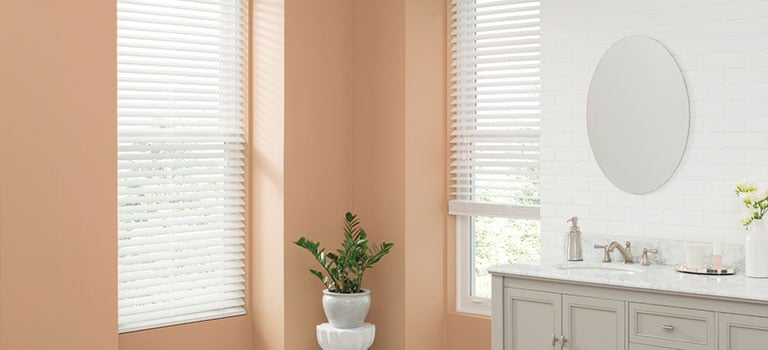
Faux wood blinds look like wood, but they're made from a polymer. Water doesn't hurt it. It also resists cracking, peeling and yellowing. A wipe with a soft cloth dries the slats off in the morning.
Real wood blinds behave differently. Damp air can make them warp, and a slat that sits against wet glass all winter is asking for trouble. Keep real wood on windows that stay dry. Faux wood blinds come cordless or motorized, with a 2 inch or 2 1/2 inch slat. You can see the colors on our faux wood blinds page.
Leave a little gap on the coldest nights
Close the blinds in the evening to keep the room cozy, but on the coldest nights don't seal the glass off tight. Close the slats, but raise the blind an inch or two off the sill. Some room air can then reach the glass, and the window stays a bit drier.
January will test this more. If a reading corner by the window feels cold on a January night, a warmer layer helps there. The reading nook ideas with Roman shades show one way to set that up.
Which rooms to do first
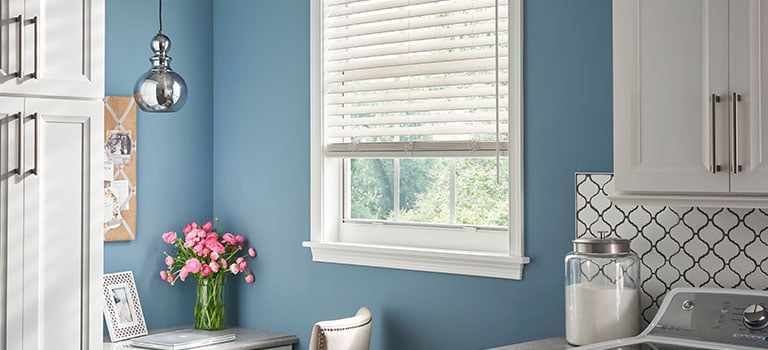
Start with the bedrooms. They're usually the worst, because the door is closed all night and the room fills with moisture from the people sleeping in it. If you turn the heat down at night, the glass gets colder too. Colder glass collects more water, so bedroom windows are often the wettest ones in the house by morning.
Next come windows on the north side. They get no sun to dry them during the day, so the water can sit there until noon. A window tucked behind a porch is the same.
Faux wood is also my pick over the kitchen sink and in the bathrooms. In a Coralville townhome the narrow windows and door glass need their own sizes, which our post on townhome windows goes through.
Before you call anyone
Walk the house on the coldest morning of the week, before you open anything. Note which windows are wet and which stay dry. Count the wet ones, since those are where faux wood goes first. We serve Coralville and come to the house. Bring that list, and we'll go over faux wood blinds in Iowa City window by window.
Kevin Sill is CFO and co-owner of the family-owned Budget Blinds franchises serving the Iowa City area.