
Matching Old Oak Trim: Wood Blinds in Iowa City and Tipton
Old stained trim often isn't the color its wood name suggests. So before you pick wood blinds in Iowa City or out in Tipton, look hard at what color that trim is today. Then decide if the blinds should match it, run a step darker or go painted. I keep real wood in the dry rooms. The kitchen and baths get faux wood in a color that plays along.
First, what color is your trim really?
Tipton's Reichert House shows how far off the name can be. It was built in 1883 in the county seat. Its National Register nomination describes halls that were "stained to imitate hard woods," namely walnut and ash. Painters back then were good at this, and they could make one wood pass for a richer one. If your house is from the same era, its trim may be playing the same trick.
The old Tipton State Bank on Cedar Street went the other way, with real walnut paneling. Its National Register nomination also notes that most of its south windows were swapped for glass block after the wooden sash rotted and let air in. Old wood frames do that, so check each one for drafts and soft spots before you settle on an inside mount.
Time changes it too. Add a century of varnish, sun and wood smoke on top of that. Trim that started out golden can read reddish brown now. Two rooms in one house can drift apart too. One just got more sun.
So I'd forget the species name and match the color you see. We bring real wood and faux wood samples to the visit for exactly this. Hold one from each stain family flat against the casing in the room, on the wall that matters most. One will disappear into the trim. That one is your starting point.
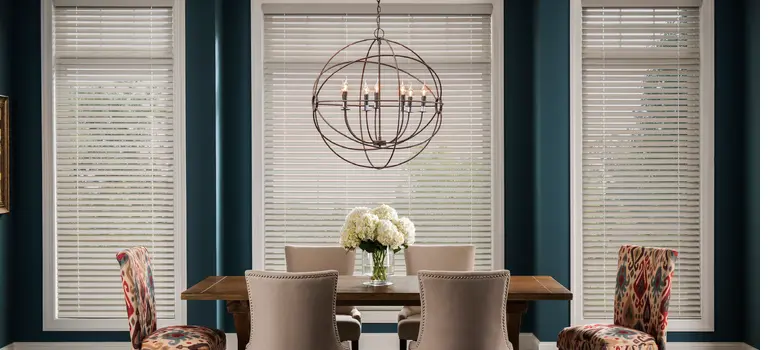
Match the trim, or go painted?
Most older homes land on one of four answers. I'd work through them one room at a time.
- The trim is beautiful and it's the same color in every room. Match it with a stained wood blind, or go one shade darker. The blind looks like it came with the house.
- The trim changes from room to room. Don't chase four different stains. Pick a painted blind in a warm white or soft cream for the whole house. It ties the rooms together and lets each room's trim show on its own.
- The room already has a lot of wood. Think oak floors, a built-in buffet and dark furniture. A stained blind can tip it into heavy, while a painted blind gives your eye a rest. It also helps in winter, when the afternoons are short and a dark room feels darker still. Light slats bounce more of that short afternoon back into the room.
- The trim was painted years ago. Match the paint. We can color-match a wood blind to it, so a white that's gone a little yellow gets matched instead of fought.
If you're torn between two, we'll tape both up while we're there. Step back across the room and see which one you stop noticing.
A wood valance helps either way. On an old double-hung window, the valance hides the headrail and gives the top of the window a finished edge. Valance styles run from standard to contemporary. Our wood blinds page shows the slat sizes and finishes side by side.
Why slats suit an old double-hung window
Wood blinds just fit old houses. A stained blind next to original trim looks like it belongs there. A tall double-hung window with a blind tucked inside the casing looks like the house was built that way. In Iowa City's Brown Street Historic District, more than 60 houses went up between 1900 and 1930. Many of them used Craftsman detail in the interior finishes. If your trim is stained wood like that, a stained wood blind matched to the casing fits better than paint.
Slats give you a kind of control a fabric shade doesn't. Tilt them to aim light up or shut out the view. That's handy in a house with porches and big trees, where light changes a lot room to room. For the dim front rooms those old porches create, see winter light in Goosetown and Longfellow homes.
All of our blinds come cordless. Real wood can also have a motorized tilt if you want to adjust a tall window without reaching.
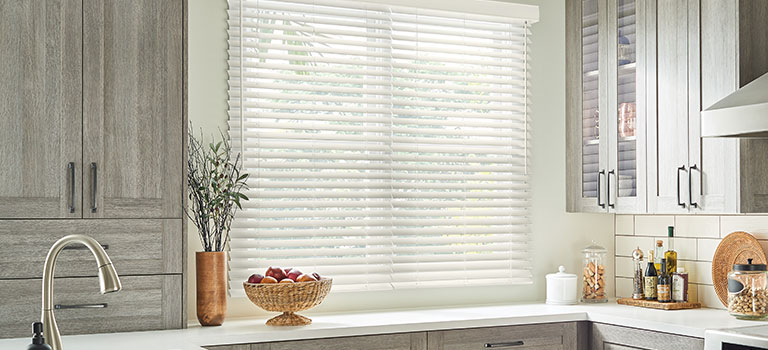
Where faux wood blinds make more sense
Real wood and steam don't mix. Steam and long hours of hard sun can make it warp. So I keep it out of kitchens, baths and the laundry. Those rooms get faux wood or composite blinds, which hold up to damp air.
The question in an older house is color. Faux wood comes in set colors, so you match it from samples. In a kitchen that opens to a stained dining room, I'd usually go painted on both sides. A soft white faux wood in the kitchen and a matching painted wood blind in the dining room look like one choice. If you want stain in the dining room, pick the faux wood color while you hold it next to the real wood. Get as close as you can, and keep the slat size the same so the rows line up across the opening.
One more spot to watch is a south or west window that bakes in the afternoon. If a room gets hours of hard sun on the slats, faux wood is the safer pick there too. If that room has the TV, solar shades for TV glare may suit it better.
Fitting blinds in an older frame
If your house has older frames, one may be a little wider at the top than at the bottom. You usually can't tell by looking, and a blind made for the wide spot will bind at the narrow one. We measure every window at the visit for that reason, so you don't need a tape measure.
Depth matters too. Blinds need room inside the frame for the slats to tilt. An inside mount shows off the trim, which is usually the point in an old house. If the frame is shallow, a narrower slat may fit and still tilt freely. If it won't, we can mount on the trim or above it.
One last tip before you choose anything. Look at your trim on a cloudy afternoon, when the light is flat and even. Sun flatters stain. Bright sun can make it look warmer than it is. A gray day shows you the color you'll live with most of the winter. Pick a day like that for a visit about wood blinds in Iowa City, and we'll match the trim in that light.
Kevin Sill is CFO and co-owner of the family-owned Budget Blinds franchises serving the Iowa City area.