
Single or Double Cell? Cellular Shades in Madison WI
Cold glass is the first thing a new house teaches you in winter. If you're pricing cellular shades in Madison for a newer place in Windsor or DeForest, start there. Find the windows you feel from your chair on the coldest nights, then decide how much shade each one needs. For most bedrooms single cell is plenty. Double cell belongs on the rooms that stay cold no matter what you do.
Why does a new house still feel cold by the window?
New windows are tighter than old ones. That helps. But on a winter night the glass is still the coldest surface in the room, and you'll feel the chill coming off it if you sit nearby after dark in January.
A new lot adds a few things of its own. If your subdivision went in on open ground, the trees are still young and nothing breaks the wind yet. Madison averages about a foot of snow in December and a bit more in January, with January lows near 12. That cold sits against the glass all night. The thin builder blinds most new houses come with do very little about it.
Which rooms to do first in a new house is its own question. Our builder blinds post for Verona, DeForest and Windsor covers that order. This one is only about the glass.
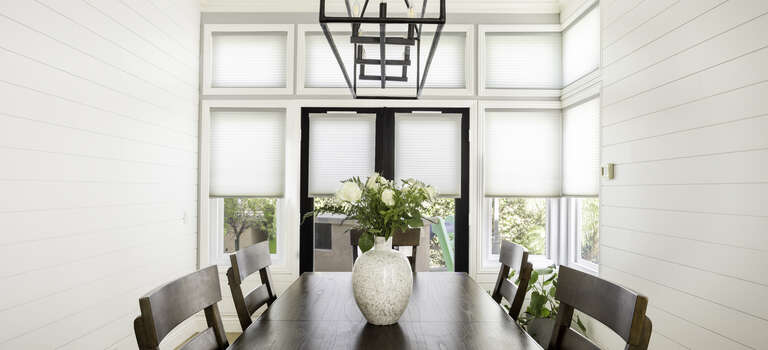
Single cell or double cell: what's the difference?
Single or double cell sounds like a bigger choice than it is. Each shade holds still air in its honeycomb pockets, right where the cold comes off the glass. A single-cell shade has one row of those pockets. A double-cell shade stacks a second row behind the first, so more still air sits between you and the window.
In a new house with good windows, single cell does the job in most rooms. It's lighter and stacks a little smaller at the top when it's raised. Double cell pays off where a room fights the cold all winter. When we come out, we bring both kinds so you can hold them up to your own glass and feel the difference.
Which windows should get double cell?
Go by the room, not by the house. These are the windows where I'd spend the extra:
- A bedroom over the garage. The floor is cold, and the window makes it worse.
- A corner room with two outside walls and glass on both.
- Windows on the north side that never see the winter sun.
- The big wall of glass in the great room, if your couch sits right in front of it.
- Any window where you feel a draft at your ankles when you sit nearby.
Everything else can go single cell. Most homes end up with a mix, and nobody can tell from the street. Just keep the fabric color the same from room to room.
How do the mount and the edges change things?
A shade mounted inside the window opening looks tidy, but it leaves a thin gap down each side. On a cold night that gap lets the air behind the shade mix with the room. If the trim is deep enough and the room isn't a bedroom, inside is fine.
If the frame is shallow or the room needs to stay warm and dark, hang the shade on the wall just outside the frame. It covers the edges and blocks more light and draft. For a bedroom where someone needs real dark, add block-out channels down the sides. Those are slim tracks that close the gap at each edge. Cellular shades need very little frame depth, so even a shallow window in a new house can take one.
Bedrooms have one more thing going for them in winter. The mornings stay dark late, so a bedroom shade has very little sunrise to fight right now. In June the sun comes up hours earlier, and a pale shade on an east window turns into a nightlight. So pick bedroom fabric for June even though you're buying it in November. Room darkening covers both seasons.
What about the great room and the patio door?
For a great room I'd go light filtering. You get soft light all day and the room never feels gloomy. That fabric hides very little after dark (what a neighbor can see through light-filtering fabric), so add a second layer on any window that faces the street.
Along one wall of glass, match every shade: one fabric and one mount. Tall windows you can't reach are a good spot for battery-powered motorized shades. Set them to close at sunset on their own. A sun or temperature sensor can lower them on a bright afternoon when nobody's home. Light levels and lift options are on our cellular shade styles page.
A sliding patio door is its own question, and it gets its own post.
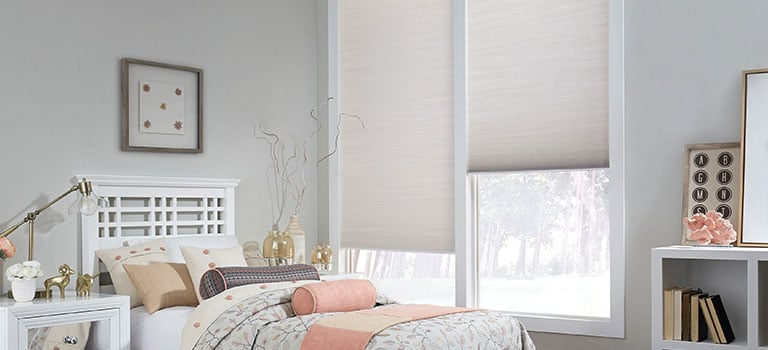
What are the limits of cellular shades?
The cells catch dust. Give them a pass with a soft vacuum brush now and then, top to bottom, while the shade is all the way down. They're not a fit for a steamy bathroom either. Faux wood handles that better when you get to it. And the look is simple. If you want more texture in the great room, add drapery panels at the sides later.
Where to start this winter
Start with the two or three windows you feel from your chair on the coldest nights. Decide single or double for each one. Then keep one color family through the whole house so the windows look tidy from the street. Once you know which windows those are, talk to us about cellular shades in Madison and we'll go from there.
Kevin Sill is CFO and co-owner of the family-owned Budget Blinds franchises serving the greater Madison area.