
A Guest Room That Works All Winter: Custom Blinds in Madison
The spare room is the hardest window in the house, because it has two jobs. It sits empty for weeks, then fills up all at once when family comes home for the holidays. A guest wants that window dark and private at night. You want steady light at the desk by day. For a room like this, my take on custom blinds in Madison is short. A wood blind handles the desk. Add a second layer for the guest.
What does a two-job room ask of one window?
Start with the guest. In the last week of December it's still dark in Middleton when most people get up. A guest who sleeps in until nine will still see the sun come in, so morning light belongs on the list. Light from outside after dark bothers people too, along with the feeling that someone on the sidewalk can see in.
Lie on the guest bed one night with the lights off. See how much the streetlight brings in. Middleton has been switching its city streetlights to LED (City of Middleton), so the one out front may not be the light you remember.
Now the desk. In winter the sun stays low all day, so it reaches deep into a south-facing room around midday. That's nice for the plants and hard on a laptop screen. If you work from that room, you want to soften the light without shutting it out. The camera side of it gets its own post on video call glare in a Madison home office.
One setting can't do both jobs, so you need either a covering with two settings or two layers on the window.
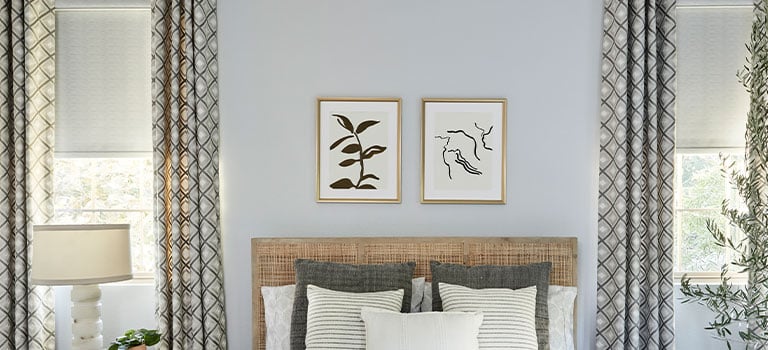
Where do custom blinds fit in a guest room office?
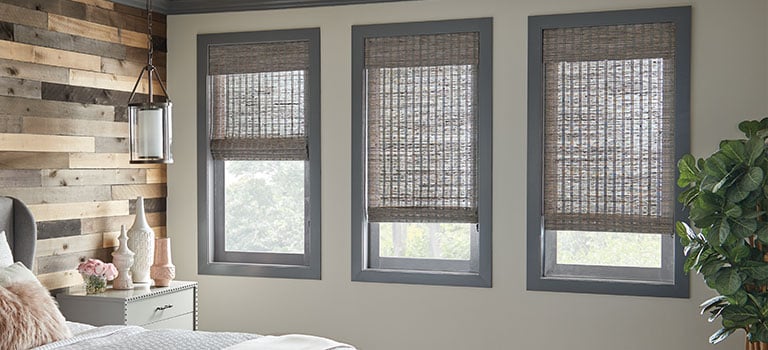
If the desk is the bigger job, I'd look at cordless wood blinds first. A blind can do something a shade can't. Tilt the slats up and the daylight bounces off the ceiling instead of landing on your screen. You keep a bright room and lose the glare. Each blind is made for that one opening and sits right in the frame you have.
Wood blinds handle daytime privacy as well. From the edge of the bed, keep closing the slats until you lose sight of the sidewalk. That works in daylight. Once a lamp is on after dark, close them all the way or let a drape do the job.
Blinds have a limit at night. Light slips between the slats, along the edges and through the small holes in each slat. A routeless option drops those holes. A room-darkening version helps too. Even then, a blind on its own won't make a bedroom fully dark.
So for guests who sleep light, add drapery with a blackout lining over the blind. The wood does the daytime work and the drape closes the room at night. Cold window? Pick a thermal lining instead. Keep the panels short enough to clear any heat register on the floor.
Every blind on our blinds page is made cordless, or you can go motorized. A guest who has never seen your house can work a cordless blind in the dark without hunting for a remote.
Room darkening shades or one shade that does both?
If sleep is the bigger job, a shade is the simpler answer. If you want one product instead of two layers, the alternative to my pick is a dual roller shade. It holds two shades in one: a light-filtering fabric and a blackout fabric that each move on their own. Lower the light-filtering one while you work and the glare softens. Lower the blackout one when a guest turns in.
That light-filtering half is a daytime fabric. Our post on light-filtering shades at night explains why it shouldn't be the only thing between a guest and the street.
A room-darkening cellular shade also works and is dark enough for most guests. For someone who sleeps well past sunrise, add block-out channels along the sides to close the edge gaps. A mount on the wall above the frame blocks more light than one inside it. Order it top-down/bottom-up and you can let daylight in over the desk while the lower glass stays covered.
My checklist for the spare room
This is close to the list we go over at the free visit, where we talk through how the room gets used before anyone looks at fabric.
- Note which side of the bed faces the window, since that's where the morning light lands first.
- Note when the sun hits the desk on a clear day, and which way the screen faces.
- Decide who works the shade. Guests need a lift they can figure out by feel.
- Check for a heat register under the window before you choose drapery length.
- Hold fabric next to the bedding and the desk in that room's own light.
- Decide if the room will stay shut most of the winter, since a shut room runs cold and that can tip the pick toward a cellular shade.
What about the weeks when the door stays shut?
A lot of us close the spare room door and turn the vent down once the guests leave. It saves heat for the rooms we use. The window in that room gets cold fast, though.
A cellular shade helps most here. Its cells hold air against the glass and help insulate the window. Leave it down on cold nights while the room is empty. On a sunny afternoon, raise it so the sun can warm the room a bit before you close it again. Blinds alone add less. In a room you shut off, pair them with a thermal-lined drape.
If you ask me, most spare rooms should be planned for the desk first. The office gets used far more days of the year than the guest bed does. So my own pick is a cordless wood blind, with a blackout-lined drape for the nights someone stays over. When the room is cleared out and you can picture it both ways, call us about custom blinds in Madison.
Kevin Sill is CFO and co-owner of the family-owned Budget Blinds franchises serving the greater Madison area.