
Blinds in Marion IA for Short Winter Days, Room by Room
On a sunny December noon in Marion, the sun reaches clear across the living room floor and onto the couch. By supper it's dark again. On the coldest mornings, frost creeps up the glass. The right blinds for each room let you work with all of that instead of fighting it. Let the low sun in where you want warmth. Close up tight where you want privacy. Use faux wood anywhere steam meets cold glass.
Why winter light feels so different in a Marion house
The sun rides low after the clocks fall back, and even at noon in December it sits low in the south sky. So light that stopped at the windowsill in July now reaches across the floor and partway up the far wall. A south room can feel warm and bright on a clear day, but it can also put glare on every screen.
The days are short too. Near the shortest day of the year it's dark before five. Plenty of us get home from work in the dark, and the porch light is on by the time supper is ready. So the window coverings spend more hours closed against lamplight than open to daylight.
Then the glass gets cold, and that's the part most people don't think about until they see frost on it. Warm damp air inside hits that cold glass, and you get fog and frost. It happens in an old house near Uptown and a new one in north Marion alike.
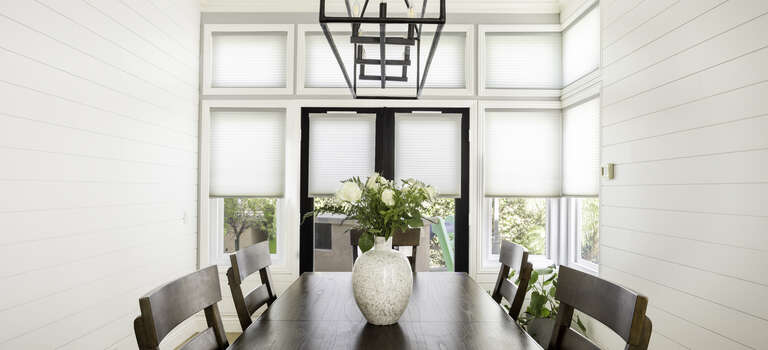
Living room and dining room: let the low sun in
These are the rooms where winter sun is a gift, so I'd pick something that lets you use it.
Blinds do this well. On a sunny day, tilt the slats until the sun lands on the ceiling instead of the couch. The room gets bright without a hot spot. Faux wood and wood blinds both work in a dry living room. Real wood looks warmer next to old oak trim, while faux wood is the easier match if your trim is painted. If you're torn between wood blinds and a Roman shade there, our Redmond Park foursquare post weighs the two.
Light filtering shades are the other good choice. A light-filtering cellular shade softens the sun and turns the whole window into a glow. It also helps a little with the cold glass. On a sunny noon, bring the shade most of the way down. The glow still fills the room.
If the room faces the street, close the blinds at dusk or pick a room-darkening fabric for those windows. After dark a light-filtering fabric shows a lot.
Kitchen and bath: where steam meets cold glass
These two rooms get the most moisture, and in winter that moisture has to go somewhere. It lands on the coldest surface, which is the glass. Real wood blinds don't like that much damp air, so I'd leave them out of these rooms.
Faux wood blinds are made for moisture, and they wipe clean. That's my pick over the kitchen sink and in every bathroom. The same goes for a mudroom window where wet coats hang all winter.
Frost is the other winter problem. A blind or shade keeps the room warmer at night, but the glass behind it gets colder. So frost can actually build up more behind a closed covering. It isn't a reason to skip one. Help the glass dry. Run the bath fan through the whole shower and a bit after. Use the range hood when you boil water. In the morning, tilt the slats open so warm room air reaches the glass.
Kids' rooms: cordless first
Cordless matters most in a kid's room, and our blinds come cordless. You can add a motor if you'd like. For an older kid who wants to see out, a cordless faux wood blind they can tilt themselves works well. It's tough and it wipes clean.
A nap room is the one place I'd pass on blinds. Light always slips between the slats, and a toddler at nap time will find it. A room-darkening cellular shade with side channels does better there. It's cordless too, and the channels close the gaps along the edges.
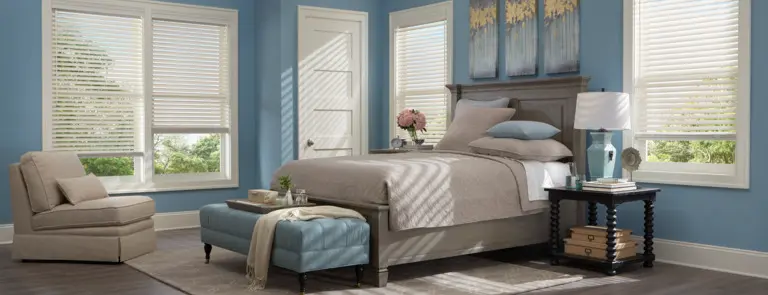
Bedrooms: dark when the alarm goes off, private before supper
Winter bedrooms have two jobs that pull in different directions. It's still dark when the alarm goes off, so you want light the moment you open up. Then it's dark again before supper, so you want privacy early.
Blinds handle both. Open them in the morning and you get all the daylight there is. Close them tight at dusk and the room is private. If you want the room darker on weekend mornings, ask about routeless wood blinds because they block more light.
A light sleeper may want more. Room-darkening cellular fabric plus side channels or light guards gets you there. They block the most light around the edges. Lined drapery hung over the blinds works too.
| Room | My first pick | Why |
|---|---|---|
| Living and dining | Wood or faux wood blinds, or light filtering cellular shades | Use the low sun and tilt away glare |
| Kitchen, bath and mudroom | Faux wood blinds | Handles steam, snow melt and frost on the glass |
| Kids' rooms | Cordless room-darkening cellular shades | Darker naps, no cords |
| Bedrooms | Wood blinds, routeless if you want it darker | Open wide in the morning, shut tight at dusk |
How do you pick the best blinds for your house?
Judge every option in the room it's for, in winter light. A blind that's right for the south living room can be wrong for the kitchen. Older home near Uptown? The Pucker Street and north Marion windows post covers what those houses need. You can see our full range of blinds and shades online.
My last tip takes one sunny afternoon. Walk from window to window in the middle of the afternoon and notice where the glare lands. Those are the rooms that need tilting slats, and the rest can take a simple shade. When we come out to talk about blinds in Marion, show us those windows first.
Kevin Sill is CFO and co-owner of the family-owned Budget Blinds franchises serving the Cedar Rapids and Marion area.