
Old Windows, Long Nights: Window Treatments in Mount Vernon
From November on, the front room of an older house is lit for hours every evening. For window treatments in Mount Vernon front rooms, I keep the plan short. Put one good shade on the street-side window in November. Add lined drapes in December if you want a second layer. January is only about how you use those two layers. February is for deciding what comes next, like a top treatment or the back rooms.
Why the front room changes from November on
It's dark before five by early December, so the lamps go on before supper and stay on all evening. That's when a front window shows the most. If your house sits close to the sidewalk, people walking by are only a few steps from the glass.
The windows themselves matter too. The city has three historic districts: Ash Park, the Commercial district and the Cornell College district. Its historic preservation design guidelines favor keeping and repairing old wood windows, with storm windows that line up with the sash. Those guidelines are about the outside of the house. What you hang inside is up to you.
So if your house is in one of those districts, the old sash may well be staying. Old wood windows can be lovely. If yours run a little drafty, whatever you pick has to work with that. The older frames on Pucker Street raise the same questions, and that post on north Marion windows goes through what they usually need.
November: pick the one shade for the street side
This is the main buying decision. The shade you choose now does the daily work in that front room until the windows open again in spring.
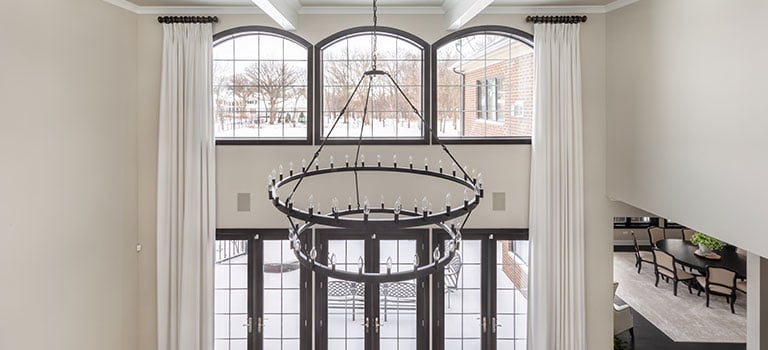
For most front rooms I'd pick a cellular shade in top-down/bottom-up, so daylight can come in over the top while the lower glass stays covered. You don't want to sit in the dark at three in the afternoon. Pleated, Roman and woven shades come that way too if you prefer their look.
Pick the fabric for how it looks in the evening. Light-filtering fabric is fine by day. After dark, a lamp behind it turns anyone crossing the room into a moving shadow for the street. On the window you sit by every night, choose a room-darkening fabric or plan on the drapes for December.
A sheer shade can be that one shade instead. They have soft fabric vanes between two sheer layers. With the vanes open you see out and still get some daytime privacy, and with the vanes closed you get full privacy at night. They come cordless or motorized, and our sheer shades page shows how the vanes work.
December: add lined drapes if you want them
December has the longest nights. It's also when the front room gets the most use. Guests come by and a tree may go up in the window. If the shade alone feels thin at night, this is the month to add the second layer.
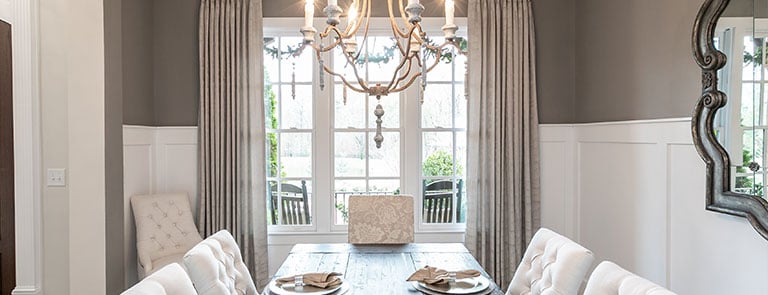
Side panels that close across the window give you privacy and a softer look. A blackout lining closes the room the most. A thermal lining is the pick if the window also feels cold. Keep the rod wide enough that open panels stack beside the glass, since an old window rarely has light to spare. Our own team hangs the shade and the rod together, so both fit on the trim.
If a tree goes in the front window, keep the shade up and the drapes open there. The street gets to enjoy it. Close the drapes on the other front windows when you want privacy.
January: same two layers, used for the cold
Nothing new goes up in January. Old glass runs cold in January, even behind a storm window. You feel it from the chair.
The cellular shade from November does its most useful work now, since it helps insulate the window. Lower it at dusk and the chair by the window feels better. On a sunny day, raise it on the south side and let the sun warm the room for a few hours. Close the lined drapes over it on the coldest nights.
Watch the depth if you've added interior storm windows. They sit inside the frame and take up room a shade would use. In that case a mount on the trim is often the easier fit. It also covers the gaps where cold air sneaks around an old frame.
February: window treatments to plan for spring
By February you know which windows annoyed you. The front room is set, so this is the month to decide what else the house needs and add it.
Look back at the other rooms. A side window facing a neighbor may only need a shade that closes. A back bedroom may want room-darkening fabric before the early summer mornings show up.
If you like the layered look on the front window, a valance or cornice over the shade and drapes finishes an old window nicely. The differences between valances, cornices and swags are laid out in an earlier post. Pick the top treatment after the shade and drapes are up, so its color can tie the two together. We can help you plan window treatments in Mount Vernon whenever the front room is ready.
Kevin Sill is CFO and co-owner of the family-owned Budget Blinds franchises serving the Cedar Rapids and Marion area.