
Sleep by Day? Rochester Blackout Shades That Seal the Edges
Work nights around Rochester? The darkest single shade I can put on your bedroom window is a cellular shade with side channels. My second choice is a blackout roller shade with lined drapes hung over it. Either way, the fabric is only half the job. Most of the light that wakes you up sneaks in around the edges, and I'll show you how to find every leak.
One bedroom, one night shift
Say you work 7 p.m. to 7 a.m. You get home, eat something and you're in bed by 8. You'd like to sleep until 3. Your bedroom faces east, toward the street. That's our room.
In June, that room has a real problem. It's light outside before 5 in the morning, and it doesn't really get dark until after 9:30 at night. An east window catches the low morning sun right about the time you lie down. A west window has the opposite problem, with the hot afternoon sun coming in while you're trying to stay asleep.
The federal job-safety agency's sleep tips for night-shift nurses start with blocking all light from the bedroom windows. Blackout shades, drapes or both will do it. They also mention the light that comes in under the door. I'll come back to that one, because people forget it.
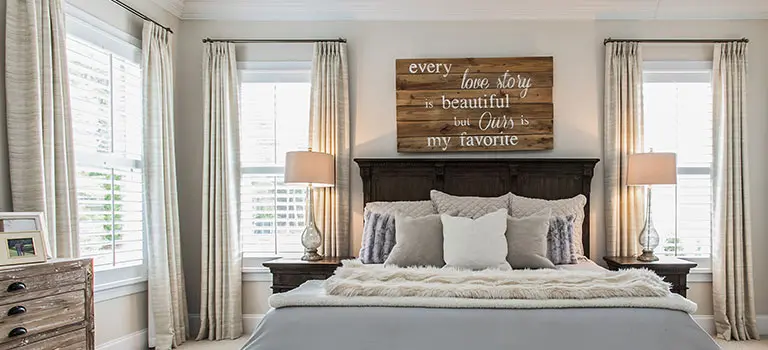
The painter's tape test
Before you buy anything, find out where the light is getting in now. It's free. It takes about fifteen minutes. Pick a sunny day and go into the bedroom at the hour you'd normally be asleep. Close whatever you have on the window, turn off every light and wait a couple of minutes so your eyes adjust.
Now walk the room with a roll of painter's tape. Every time you see light, put a short strip of tape next to it. Check the left and right edges of the window, the top and the sill. Look at the door, any other glass in the room and every little glowing light on a charger or a clock. When you're done, step back and look at the tape. Most bedrooms end up with tape down both sides of the window. That usually means the mount needs work more than the fabric does. Each mark points to its own fix:
- Tape down the sides. The most common leak. Even a true blackout shade leaves a small gap at each side when it's mounted inside the frame. Side channels or light guards close that gap, and an outside mount that overlaps the frame helps a lot.
- Tape across the top. Light is getting over the shade where it meets the headrail or the frame. A cornice or valance covers it, and so does an outside mount set a few inches above the window.
- Tape along the sill. The shade isn't sitting flat at the bottom, or it's a touch short. A custom shade made to your exact height fixes this, and so does a drape that runs well past the sill.
- Tape in the middle of the shade. The fabric itself is letting light through. You need a darker fabric, like true blackout or room darkening with a liner.
- Tape on the slats of a blind. Many blinds have small holes in each slat for the lift cords. Each one lets in a pinpoint of sun. A shade fixes this, and so does a routeless blind with no holes.
- Tape by a crank or a lock. Window hardware can hold a shade off the glass and leave a gap. An outside mount usually solves it.
- Tape at the door. Hallway light under the door can light up a dark room. A door sweep or a draft stopper takes care of it.
- Tape on a charger. Cover the glowing dot with a little tape and leave it there.
Which blackout shade I'd pick
Start with the words. Room-darkening fabric blocks most light. The room gets dim, but you can usually still tell it's daytime. Blackout fabric is built so no light passes through the cloth, and even at noon the face of the shade looks dark. Either one can still leak at the sides, which is why your tape marks matter more than the label. The names also vary from product to product. Cellular shades come in room-darkening and blackout versions, and roller shades run from sheer to blackout.
My first pick is a cellular shade with side channels. Blackout or room-darkening cellular fabric both work here. Paired with channels or light guards it gives you complete darkness. It's the darkest single shade I can offer. The honeycomb cells also help muffle street noise a bit, which is a small bonus when you're sleeping at noon. Our guide to single, double and blackout cells explains the cell types. Our cellular shades page shows the options.
Second is a blackout roller shade with lined drapes over it. The roller blocks the glass and the drapes cover the edges the roller leaves open. Third is a Roman shade lined for room darkening, with drapes. Roman shades look warm and soft. On their own they leak at the edges, so I'd always layer them for a day sleeper. If your only tape is down the sides, the first pick will likely fix it. Tape at the top or the sill too? That's when I'd add drapes.
Blinds can work. Still, I'd pick a shade over a blind for most day sleepers, since light slips between the slats and through the cord holes. A routeless wood blind has no holes in the slats, so it blocks more light. With blackout-lined drapes over it you can get a room pretty dark. It's a good path if you really want wood in the bedroom.
Mounts, drapes and getting it measured
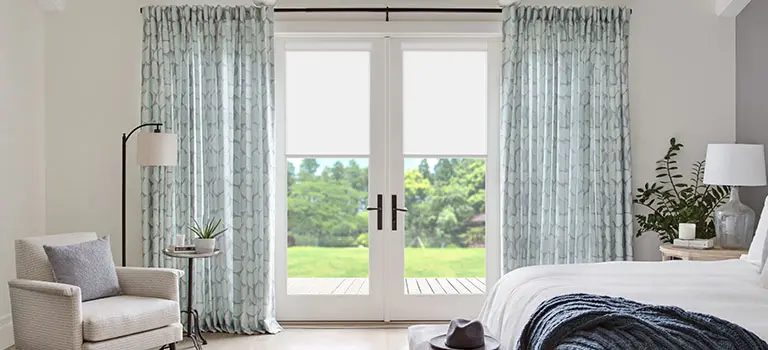
With an inside mount, the shade fits inside the window opening. It looks neat and you see the trim, but you'll always have a small gap at each side. With an outside mount, the shade is fastened to the wall or trim and covers the opening. Let it run a few inches past each side and above the top. That overlap blocks a lot of the edge light. It's often the simplest fix when channels won't fit. A deep frame with nice trim might get an inside mount with channels. A shallow frame might get an outside mount that covers the trim.
When the shade alone still leaves light at the edges, drapes finish the job. You can line drapes three ways: standard, thermal or blackout. For a day sleeper I'd go with blackout. Mount the rod high above the frame and well past each side. Let the panels reach the floor, or at least well below the sill. If light leaks over the rod, close off the top with a valance or cornice. Pick a drape color that goes with the rest of the house so the bedroom still feels like home.
Our blackout shade options show the mounts, side rails and liners side by side. When you want help, you can ask for a free in-home visit on our page about blackout shades in Rochester. Tell us your sleep hours and which way the bedroom faces when you call, and we'll plan the visit around your shifts.
The rest of the house, and the first morning
Day sleepers usually share the house with people who keep normal hours. The kitchen is bright, somebody's watching TV and the dog wants out. So the goal is one dark room that still looks like part of the home from the street. I'd pick a shade color that matches the other windows on that side of the house. You don't need a black shade to get a dark room. A light-colored one with blackout fabric and a tight fit will do it. If your sleep runs into the evening, outdoor lights matter too, from streetlights to the parking lot. Our condo and townhome guide for the Rochester area covers bedrooms that face lots and walkways.
Our own team hangs every shade and checks that each one closes fully before we leave. Your own check still matters, because it happens at the hour you actually sleep. So on that first bright morning, do the tape test one more time. If your window faces west or south, try it again around 3 in the afternoon.
Then think about a motor, especially if your shift runs long. A motorized shade on a timer can close before you get home, so the room is already dark when you walk in at 7 in the morning. If you'd rather keep it simple, just lower the shade before you leave for your shift.
Kevin Sill is CFO and co-owner of the family-owned Budget Blinds franchises serving Rochester and southeast Minnesota.