
Old or New Kasson Basement? Window Coverings Near Rochester
Fixing up a basement in Kasson? I'd start with the window, not the room. A small window up at ground level needs something slim that clears the glass. A window down in a well needs privacy without making the room darker. An egress window is your way out in an emergency. Whatever covers it has to raise all the way, fast. Some basements have all three, and the right basement window coverings around Rochester depend on knowing which is which.
Small, high windows at the top of the wall
These are the short, wide windows that sit right at ground level. In a lot of basements they're the only daylight you get, so I'd protect every bit of it.
I'd go with a slim shade that stacks small. A roller shade works anywhere, and a single-cell cellular shade is nice if the room stays dry. Mount it a little above the frame. When it's up, it sits on the wall instead of the glass. You keep all the light. A light-filtering fabric still lets daylight in, and anyone walking past sees a soft glow instead of your laundry room. Skip heavy drapes on these. They block more light than they're worth, and on a small, high window you can't spare it. If the frame is shallow, a cellular shade is one good option. It needs very little depth to mount inside the window.
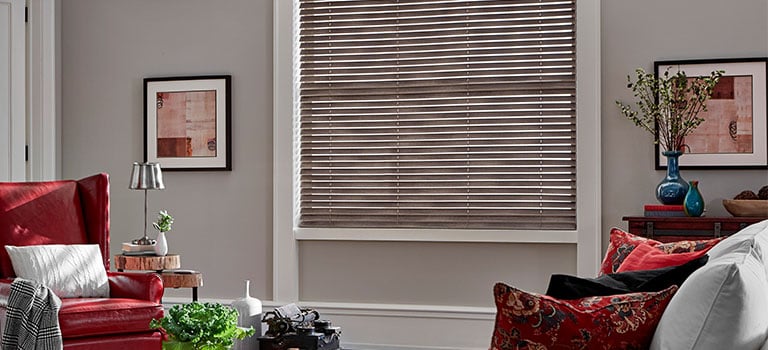
Windows in a well, and the view you'd rather not see
A window well brings more light than a ground-level window, but it puts the glass right at yard level. Anyone standing in the yard looks down into the well, and their line of sight comes in through the upper part of the window. So on a well window, the top of the glass is where privacy matters most. I wouldn't use a top-down shade here, since lowering it from the top opens exactly the part people can see through.
What works better is a light-filtering shade over the whole window. The glass glows, the room stays fairly bright and nobody up top can see in. If you want more light during the day, lower a regular shade partway so it covers the upper glass and leaves the bottom open. Just skip anything dark or heavy. Window well light is weaker than it looks, and a dark fabric will make the room gloomy.
When people say they want to hide a basement window, they usually mean the view. A window well can show you gravel, a metal liner and the bottom of a shrub, and that same light-filtering fabric turns all of it into a soft blur. Mount the shade a bit higher and wider than the frame, too. The window looks bigger and more like the ones upstairs.
Egress windows: keep the way out clear
An egress window is the larger basement window that's meant as a way out in an emergency. The window itself has to meet code. That part is between you, your builder and your inspector. The shade's job is simple. Stay out of the way. That makes the choice pretty easy.
- A cordless shade or blind that raises all the way. You push it up in one move and the whole opening is clear.
- A light-filtering fabric if the window sits in a well. It keeps the room private from the yard and still raises fully when you need it to.
- Nothing fixed across the glass. No stapled fabric, no tension rods and no panels that block the sash.
If the window cranks open, check that the crank and the open sash clear the shade too. Our own crew does every install. On an egress window, we raise the shade all the way and check the opening before we go.
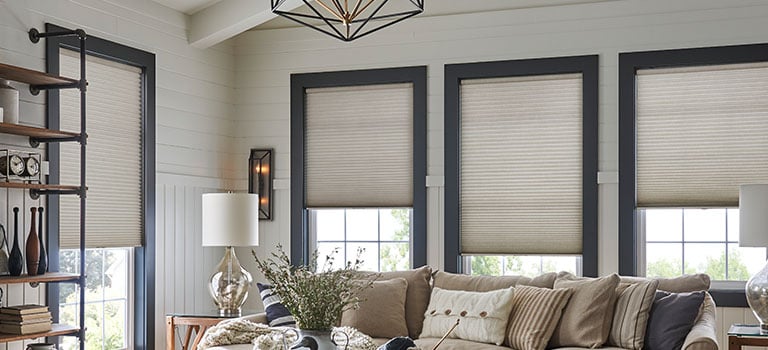
What holds up in a damp basement
A basement has more moisture than the rest of the house. That's just how it is when there's damp soil on the other side of the wall and cool air on this side of it. Moisture problems can start once indoor humidity climbs above 50 percent. A dehumidifier or the air conditioning helps a lot in summer.
So for basement window blinds, I'd pick materials that don't mind a little damp. Faux wood blinds look like wood but are made of a polymer that resists moisture. They're my first pick for a basement office or a lower-level bath. You can see the faux wood blind options we carry. Vinyl blinds are stain-resistant PVC and wipe clean, so they're a good match for the window over a laundry sink. Cellular shades are nice in the dry rooms, like a finished family room. The honeycomb cells trap air and help insulate glass that sits next to cold ground.
I'd keep real wood blinds and woven wood shades upstairs. Real wood can warp in humid rooms, and natural materials don't love damp air. In winter, check the basement glass now and then. Lower-level windows can collect moisture on cold mornings. Our post on why Rochester windows frost on the inside explains what's going on and what helps.
Newer lower levels and older storage basements
If your house is newer, the lower level might be real living space. Family rooms, guest rooms and home offices end up down there, with bigger windows to match. I'd match the main floor's shade color. It makes the stairs feel like a hallway instead of a trip to the basement. In the family room I'd go light filtering, so it stays bright for game nights and homework. The guest room is the exception. A well window doesn't let in much light. Still, a little goes a long way at 6 in the morning, so I'd go room darkening there. If the lower level is still unfinished, plan the windows while you plan the drywall. It's a lot easier to get the mount right before the trim goes on.
Leaning toward cellular shades down there? Our guide to single, double and blackout cells for a Rochester winter helps you pick a type. Our cellular shades page shows the light levels and lift options.
In one of Kasson's older houses, the basement may just be laundry, storage and a workbench. The windows are often small and set right at the top of the wall. Keep these simple. A slim light-filtering shade or a vinyl blind is plenty. Older basements that were finished a bit at a time often end up with odd window sizes. So each one gets measured on its own.
We're happy to come look at your basement in Kasson, Byron or Rochester and measure every window. Our page on basement window coverings in Rochester is where you can book the free in-home visit.
As for order, the room you use most is usually the one to do first. For a lot of families that's the lower-level family room. The one exception is the egress window. Can you say right away which basement window your family would use to get out in a fire? If not, sort that one out first.
Kevin Sill is CFO and co-owner of the family-owned Budget Blinds franchises serving Rochester and southeast Minnesota.