
Dark Before 5: Motorized Shades for Rochester MN Evenings
On a December weeknight around Rochester the sun is down by about 4:30. Most of us get home well after that. The house has been sitting there with a lamp on a timer and every window bare. If you're thinking about motorized shades in Rochester, this is the problem they solve best. Set them to close at sunset and the house is covered before anyone pulls into the driveway.
What changes when it's dark before you're home?
In summer you close the shades whenever you think of it, but in December the switch happens while you're still at work. Once a lamp comes on, the street can see in. With that lamp on a timer, the living room can sit like that for an hour before you walk in.
That matters more on some streets than others. Silver Lake Park sits right in the middle of Rochester. If your house faces a park like that or a trail, people may walk past after dark even in the cold. A front window that faces the street or a path is the first one I'd put on a schedule.
How do motorized shades work on a schedule?
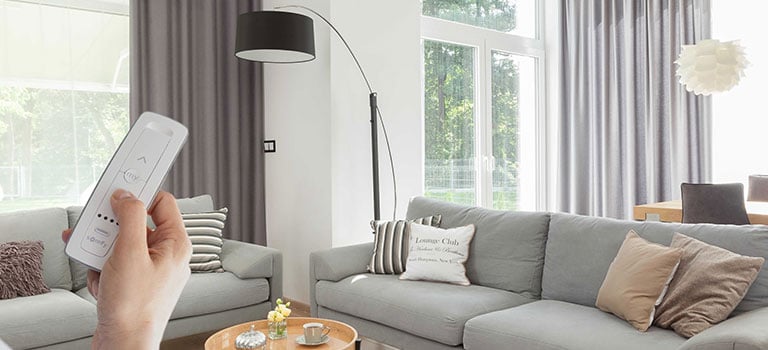
Each shade has a small battery-powered motor in the headrail or the roller. You can run it from a remote or a wall switch, and a wand or a phone app does the same job. If you already talk to a smart speaker, voice control is an option as well.
The schedule is what fixes early dark. In the app you can set shades to close at sunset instead of at a fixed clock time. As the days shorten through November and then stretch out again in January, the shades follow along. You set it once in the fall. You can also add sun or temperature sensors. Then a shade lowers when a room starts to bake or gets cold. The control options are on our motorized shades page.
Most of our shades can take a motor. Cellular shades suit a Rochester winter. If cold glass is your main worry, read about insulated shades in a northwest Rochester house first. Roller shades work well too. So do smart blinds, with a motor that tilts the slats closed at dusk.
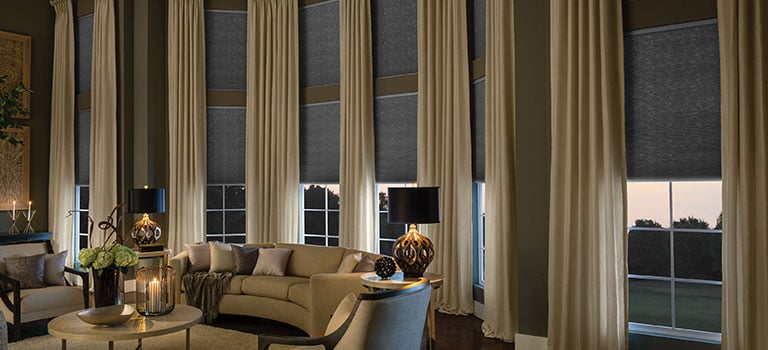
One thing to get right is the fabric. If privacy after dark is the point, pick room-darkening for that window because light-filtering fabric still shows shadows. Or keep the light-filtering shade and add drapes as an evening layer.
A season plan, from November to the solstice
You don't need a motor on every window. Most homes do fine with three or four groups as the evenings close in.
Front rooms. These close at sunset, every day. That's the window people see from the sidewalk. If your living room faces the street, this is the one group not to leave to memory.
Kitchen and family room. Set these to close a little after sunset. You still get the last of the daylight while you cook, and the room is covered before dinner.
Bedrooms. These can wait until a set evening time, or close with the front rooms if a bedroom faces the street. Have them open once the sun is actually up, which comes late in December. An earlier open just shows a dark window.
Rooms you aren't using. A guest room or an office can follow the front rooms. Heading out of town over the holidays? Shades that still lower at dusk while you're gone make it look like someone's home.
The darkest stretch runs from early December to the solstice, and after that sunset slowly creeps later again through January. A sunset schedule adjusts on its own, but a shade on a fixed clock time would close in daylight by February.
January and February: holding onto the warmth
Rochester's normal January low is around 7 degrees, with highs in the low 20s. Then the schedule does a second job. Cellular shades that close right at dusk cover the cold glass before the worst of the night. Shades that open mid-morning let the sun warm the room on clear days.
Frost on the inside of the glass changes things. Read the myths and facts post on window frost before you set the schedule for that room.
What are the downsides of motorized blinds?
There are a few worth knowing.
Motors make a soft hum while they run. Most people stop hearing it. For a bedroom, ask us to run one for you at the visit so you can hear it.
A schedule tied to sunset also only works if somebody sets it up and pairs the remotes. A small window by the back door that you pass every day can stay cordless. I'd put motors where they pay off: the windows that matter after dark and glass that's hard to reach. So do groups you move together.
As for reliability, motors work well when they're installed and set up right. A pro install sets up the motor and remote with the schedule. Some shades you already own can take a motor without being replaced, and we'll tell you at the visit if yours can.
What should you look for in whoever installs them?
Whoever you call, the motor and the schedule matter as much as the fabric. I'd want the same people who measure your windows to set up the sunset timing. Before they leave, they should show you the remote and run every shade once while you watch. Our own team does that on every order.
For the next few evenings, write down the time you actually get home and which lamps are already on by then. Then note which windows face the street or a path. That list is your first group. Bring that list when we come out to talk about motorized shades in Rochester.
Kevin Sill is CFO and co-owner of the family-owned Budget Blinds franchises serving Rochester and southeast Minnesota.