
Window Shades in Waukesha for a New Mukwonago Home
When I plan window shades in Waukesha for a brand-new house, I start with the windows the street can see. The bedrooms come next. The great room at the back can wait, even though it has the biggest glass. Everyone wants to finish that room first, but in the first winter it's usually the one that matters least.
Which windows need shades before the first winter?
Mukwonago has been one of the busier places in Waukesha County for new building, going by the state's latest net new construction report. If your house is one of the new ones, some windows may still be bare.
The days are short now. In mid-November the sun sets around 4:30, and it's dark before five. Your lights are on for hours before bed, and a window without a shade shows your living room to anyone driving by.
Start with the street side. That's usually the front room, the dining room and any window beside the front door. Next come the bedrooms, since nobody sleeps well with a streetlight in the room. Last is the great room at the back, where the main goal is glare and warmth. If the back of the house faces open land, it can wait a little longer. Plan for glare back there, though. A new yard with no big trees yet lets the low winter sun come straight into the back of the house.
Some new houses come with builder blinds on a few windows. If they work and the room isn't on your list, leave them alone until spring.
Not every house here is brand new, though. The village and town of Mukwonago each added nearly 25% more housing units between 2000 and 2010. Bought one from its first owner? Then its builder blinds have hung there for years. Check them for bent slats and worn cords, and move those rooms up your list.
Which shade goes on which window?
Each window has its own job.
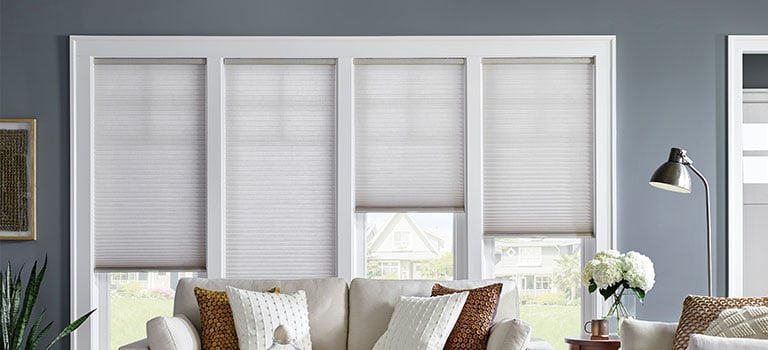
- Front room and dining room. These need privacy after dark. A light-filtering cellular shade looks lovely by day, but with the lamps on it glows and shows shapes moving inside. If you want a bright room by day, keep the light-filtering shade and add drapes you close at night. If you'd rather have one layer, pick room-darkening fabric.
- Bedrooms. A room-darkening cellular shade. For a sleeper who wants real darkness, ask about block-out channels down each side.
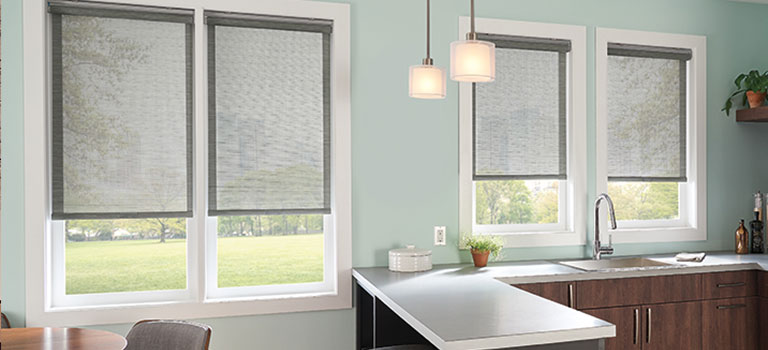
- Great room. For a south window, a solar roller shade in a medium openness keeps the view and cuts the glare. Go tighter on a west window. A solar shade is see-through at night, so pair it with drapes if the room faces a neighbor.
- Patio door. A sliding panel track or a vertical cellular shade. Both move sideways like the door and stack out of the way.
- Tall window over the entry. It's hard to reach without a ladder. A battery-powered motorized shade on a remote takes care of it, and you can set it on a schedule.
- Kitchen sink and bathrooms. These get faux wood blinds instead of fabric. They handle steam and splashes and wipe clean.
How cold does new glass get in January?
Colder than you'd think, even with new windows. They're a big step up from old ones, but the pane still sits between your bedroom and a January night. On the coldest mornings you can feel the chill coming off a bedroom window.
For that window, I'd use a cellular shade. It helps insulate the window, so the room feels less raw when you get up. If one room is where everyone thaws out after shoveling, a lined Roman shade fits too. Our post on setting up a warm-up room with Roman shades shows how. Light levels and lift choices for each fabric are on our cellular shades page. If the house next door is close, a top-down bottom-up version lets you drop the top for daylight on that side. Stop while the gap still shows you sky and roofline from your bed, before their windows come into view.
They also suit shallow frames. Some new windows have very little depth, and a cellular shade still fits inside and stacks up small when raised. For a few windows that need even more warmth, you can layer lined drapes over the shade the way our Eagle post shows.
Can you still buy old-fashioned window shades?
Yes, and the pull-down shade from your grandparents' house is still made today as a roller shade. It's the same single length of fabric on a roller at the top of the window. Now it comes with better fabric and no cord to pull.
Fabrics run from sheer to blackout. You can hide the roller in a cassette and pick a straight or scalloped bottom edge. A dual roller puts a light-filtering shade and a blackout shade in one headrail, and each moves on its own. Roller shades come cordless or motorized, which makes them safer in a house with kids and pets.
A cordless roller with a scalloped hem looks a lot like the old kind. I like it with painted trim. If you have a sunroom too, our guide to four-season rooms in Delafield and Mukwonago goes through that glass room by room.
Who does window shades for new construction homes in Waukesha?
Look for someone who comes to the house after the trim and paint are done. Window sizes in a new build can vary, even when the plan says they match. Each one should be measured on its own. The consultation should also happen in your rooms, so you see fabric against your own walls in your own daylight. That's how our free consultation works.
If you only get one window done before the holidays, make it the one beside the front door. It's lit up from inside every evening, and it's often an odd size that a stock shade won't fit. Call us about window shades in Waukesha for that window and we'll plan the rest of the house while we're there.
Kevin Sill is CFO and co-owner of the family-owned Budget Blinds franchises serving the Waukesha area.