
Woven Wood Shades in Waukesha for Rooms Full of Wood
One easy mistake with woven wood shades is matching them exactly to pine paneling. The shade blurs into the wall, and the window loses its shape. In the country rooms around Waukesha, I'd go a step lighter or darker so woven wood shades stand apart from the paneling. Then pick a liner for any room you sit in after dark, and skip it where you want the full texture.
Why do woven shades fit a house near the Kettle Moraine?
The Southern Unit of the Kettle Moraine State Forest runs about 30 miles southwest from Dousman. It's a mix of glacial hills and prairie, with pine woods and hardwood forest. If your windows look toward woods like that, the view changes a lot by season.
The hardwoods drop their leaves, so winter brings more light and a wider view. It also means less cover between you and the road. The pines stay dark green all year, so a room facing them stays dim even in December. A woven shade works on both sides of the house. It softens extra winter light without blocking it, and it adds warmth to a room that's a little gray.
Out toward Eagle it's a mix of rural and residential living. If your house sits on a bigger lot with long views and few close neighbors, natural shades suit the setting. They look like they came from the land outside.
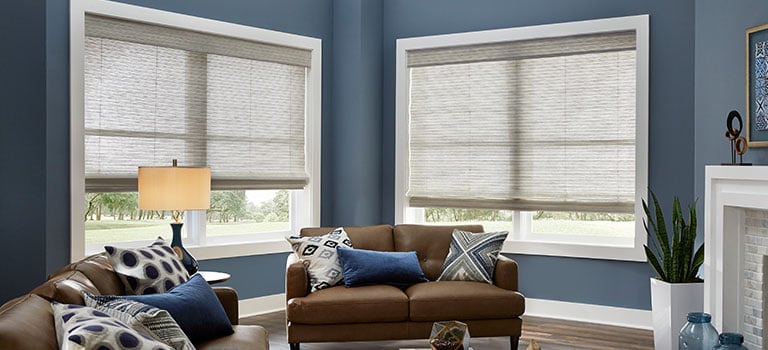
How do you match the weave to the wood?
It's mostly about color and contrast.
Knotty pine or honey-toned paneling. Go a step lighter or a step darker than the wood. A pale grass weave against warm pine looks crisp. A deeper, darker weave looks cozy.
Dark stained trim or beams. A lighter, airy weave keeps the room from feeling heavy. If you want the shade to tie back to the trim, add edge banding in a darker color. It's a fabric border along the sides that frames the shade.
Painted white trim with wood floors. Here a mid-tone weave bridges the two. It picks up the floor color and stands out against the white.
A room with a stone fireplace. Rough, textured weaves in rattan or reed look natural next to stone. Smooth bamboo can look too polished there.
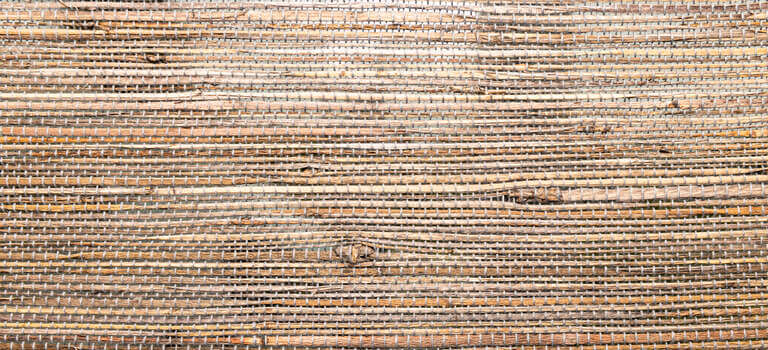
The fold matters too. A standard Roman fold stacks in flat, neat layers. A looped style has soft rolls of material even when it's down, while the waterfall style has fuller and softer folds. I like the waterfall in a rustic room, but in a cleaner room the flat fold is easier on the eye. You can see the weaves and folds on our woven wood shades page.
How much light comes through, and do you need a liner?
Without a liner, a woven shade filters daylight and gives you only a little privacy. A loose weave acts almost like a sheer, while a tight weave blocks more and blurs the view in. Either way, bare weave won't hide much in the evening once the room is lit.
So decide by room. A privacy liner is the one I'd use in a living room or den you use at night. Daylight still comes through, and it hides far more than bare weave after dark. If you want the room completely covered at night, go with blackout. A blackout liner is for bedrooms, or a TV room where you want it dim. A sunny entry or any room you mostly use by day can skip the liner and keep the full texture showing.
If the long nights have you thinking about warmth too, read about insulated shades for long winter nights in Eagle and Waukesha for ideas on layering.
Which rooms in a country house suit woven shades?
The great room is the obvious one. Tall windows and wood ceilings are made for natural texture. If the windows are high, consider a battery-powered motor so you're not reaching. Top-down/bottom-up is another good choice for a window that faces the road. Lower the top while the gap still shows treetops from your chair, and stop before the road comes into view.
A den or home office does well with a tighter weave, which cuts glare on a screen and keeps the room bright. Bedrooms work with a blackout liner, as long as you're fine with a little light at the edges of an inside mount.
Skip them in two places: the bathroom and the window over the kitchen sink. Natural materials don't do well in damp air. Faux wood blinds hold up better there.
Care is easy. A feather duster or the brush on your vacuum takes care of the dust. Just keep water off the weave. The winter care guide for blinds and shades has the full routine.
How to shop for woven wood shades
Look for someone who brings the weaves to your house. A weave that looks honey-toned online can read gray beside knotty pine, so you need to see it next to your own wood. Ask to see the liners and the edge banding at the same visit, since they change the look as much as the weave does.
When you hold a sample up, press it flat against the paneling beside the window and not just the glass. The wall is what the shade sits next to all day, so that's where the right weave stands out. If you'd like to try that against your own pine, we'll bring woven wood shades in Waukesha out to the house.
Kevin Sill is CFO and co-owner of the family-owned Budget Blinds franchises serving the Waukesha area.