
Cellular Shades in Brookfield WI: 4 Winter Mistakes to Skip
February is hard on windows here, between the cold glass and the glare off the snow. My first pick for a cold Brookfield window is a cellular shade. The honeycomb cells hold a layer of air that helps insulate the glass, and the fabric softens the glare. Where people go wrong is in how they pick them and how they use them. These are the four mistakes I'd steer you around once winter sets in, and what I'd do instead.
A lot of Brookfield homes sit on big, tree-filled lots. In July that's great. The canopy shades the house and hides you from the neighbors.
February is another story. The leaves are gone, the lawn is white and the sun sits low in the south all day. Highs here sit in the mid 30s, and we get close to a foot of snow over the month. The glass gets cold, the snow throws light everywhere and the bare trees hide almost nothing.
Single cell or double cell cellular shades?
From the side, a cellular shade looks like a row of honeycombs. That's why some people call them honeycomb shades. Each cell holds a pocket of still air, and that air sits between you and the glass.
You can get one row of cells or two. Single cell is plenty for most rooms. Double cell adds a second row behind the first, and it gives more protection from the cold. I'd save double cell for the room that's hardest to keep warm. Think of a bedroom over the garage or a room with big older windows.
Fabric goes from sheer at the light end to room darkening at the dark end, and I'd pick it room by room.
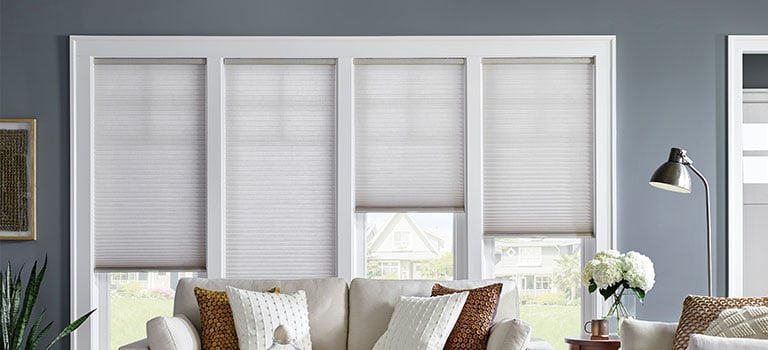
Mistake 1: Leaving every shade down all day
Once it gets cold, a lot of people lower every shade and leave them there. It feels like the warm thing to do. It isn't, at least not on a sunny afternoon.
The winter sun brings light and a little warmth with it. Big south and west windows on an open lot get full sun once the trees are bare. With the shades down, you miss all of it.
What I'd do instead is raise the shades on sunny windows by late morning and lower them around sunset. The cells then hold in the warmth the room picked up during the day. Brookfield gains more than an hour of daylight over February, so keep moving that routine a little later. If you know you'll forget, a motorized shade can follow sunrise and sunset on its own.
Mistake 2: Trusting the trees
A wooded lot can fool you, and winter is when it does. In summer the canopy blocks the sun and the sightlines. In winter those same trees are bare branches, and low sun pours right through them. So do the views in and out.
Snow makes the glare worse. A white lawn bounces light straight into living rooms and home offices, and screens wash out. With the leaves gone, the neighbor's kitchen window might now look across the yard at yours.
I'd put a light-filtering cellular shade on those rooms. It cuts the snow glare and keeps the room bright. For a window that suddenly faces a neighbor, go with top-down bottom-up. You lower the shade from the top for daylight and keep the lower half covered, so you still see sky. At night, close it all the way.
Mistake 3: Ignoring the edges
A shade holds air best when it fits well. A shade mounted inside the frame looks clean, but it leaves a little space down both sides. On a big living room window you'll never notice. On a drafty older window or a bedroom, those gaps let the chill and the light slip past.
For your coldest windows, think about mounting the shade on the wall outside the frame, a little wider and taller than the opening. Then it covers the glass with room to spare all the way around. A bedroom that has to be fully dark can get block-out channels, which are narrow tracks on both sides that the shade slides down inside.
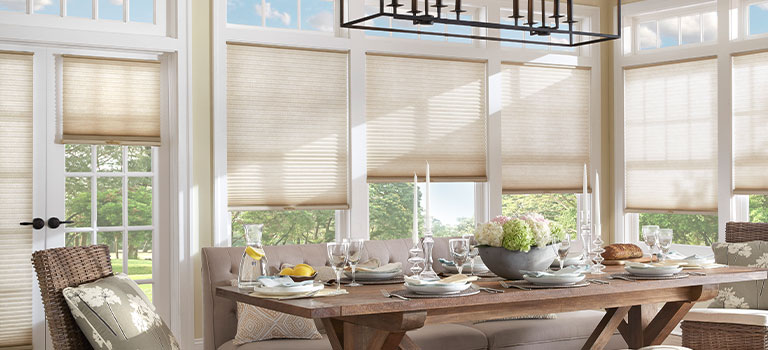
Mistake 4: One fabric for every room
Matching every window feels tidy. I get it. But a big house has rooms with very different jobs, and one fabric can't do all of them well.
I'd put light filtering in a south or west living room. The sun comes in by day, and you close it at dusk to hold the warmth. If that room faces a neighbor, plan drapery you can close at night too, for the reason below. A home office does well with light filtering or semi-sheer to cut the glare on your screen. A bedroom gets room darkening, mounted over the frame.
You can still keep the house looking calm from the street. Pick one color family and change only the light level from room to room.
Cellular shades have a few limits of their own. The folds catch dust. Give them a light pass with the soft brush on your vacuum now and then.
The look is simple. In a formal living room or dining room, some people want more texture. Drapery on each side fixes that. If you want ideas for hanging it, see how to layer drapery over a shade.
Light-filtering fabric also glows at night. Once the lamps go on, the neighbors can make out shapes. Room darkening fixes that. Our post on who can see in after dark helps you find the rooms where it matters.
Where to start before the cold sets in
If you can't do the whole house at once, I'd go in this order.
- The coldest room. Usually a bedroom on the north or west side, or a room with big older windows. That's the room where I'd consider double cell.
- The room with the worst snow glare. Often the home office or the family room with the TV.
- Any window that now looks straight at a neighbor. The bare trees made that one new.
- The big south and west living room windows. They matter, but they're also the ones you'll want open on sunny afternoons.
Everything else can wait for spring, when the leaves are back and you can see which rooms still bother you.
Every fabric and color is on our cellular shades page, and our home page has the rest on cellular shades in Brookfield and Elm Grove. Mount choices are the part we sort out in person. At a free in-home visit we go room by room, measure every window and give you a clear quote with the mounts spelled out.
Kevin Sill is CFO and co-owner of the family-owned Budget Blinds franchises serving Brookfield and Elm Grove.