
Brookfield WI Living Room Window Treatments After Dark
Most living rooms get planned in daylight and used after dark. In a Brookfield winter it's dark before five, so the evening is when that room really works. When I plan living room window treatments in Brookfield, I plan for the couch at night instead of the room at noon. That means the color under your own lamps and what the bare glass throws back at you. It also means where the TV and the chairs sit.
Why plan a living room for after dark?
Because that's when the room gets used, often from the minute you walk in until you head up to bed. By the time dinner's done and everyone settles on the couch, those windows have been dark for hours.
It's cold, too. December nights average in the low 20s around here, and January runs colder. A big living room window is often the coldest surface in the house.
So judge every choice below at night, with the lamps you really use turned on.
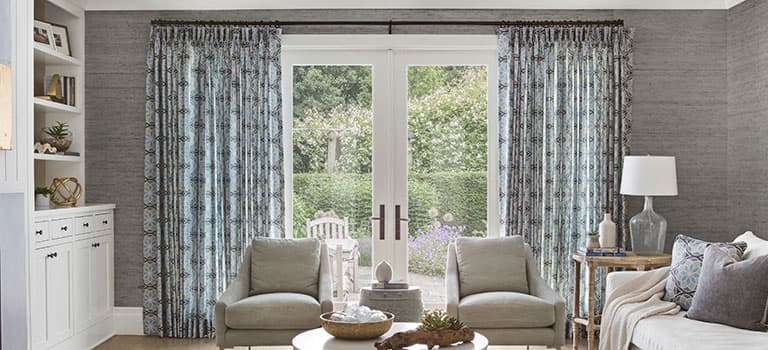
What does bare glass do from the sofa?
After dark a bare window turns into a dark mirror. From the couch you see your own lamps and the TV in it. The room feels smaller and colder than it is. Lower a shade at dusk and that reflection is gone. A pale fabric reads as a soft wall of light instead of a black hole.
A cellular shade is a good fit here because it's slim enough to hide under drapes later. On a front living room, Roman shades give you more texture. Our post on Roman shades in older Elm Grove trim goes through how they sit on a front window.
One caution for the street side. A light-filtering shade hides less after dark than it seems to by day. On a window that faces the street, pick room darkening or close a drape over it.
Where does the TV sit?
If the TV faces the window, daytime glare is the obvious problem. A light-filtering shade handles most of it. After dark the trouble is different. The lit screen shows up in the black glass behind you. From outside, the room glows and shifts every time the picture changes.
That one window is where blackout earns a spot in a living room. A room-darkening shade or a blackout-lined drape on the TV wall fixes both. The other windows in the room can stay lighter, since they don't have a screen across from them all evening.
Do your drapes really close?
Side panels that never move look nice and do nothing on a winter night. If you want drapes that close, plan the fullness and the rod for it from the start. Our guide to three ways to layer drapes over a shade covers the options.
What about the chair by the cold glass?
Maybe there's a reading chair pulled up to the big window. In January that's the coldest seat in the house after dark. You feel it on your shoulder before you notice it anywhere else.
The lining does the most for that chair. Drapes come with a standard, thermal or blackout lining. You can see the face fabrics and all three on our drapes page. A standard lining gives the fabric body. A thermal lining is made for cold glass. It's my pick for a window with a chair beside it. Close it at dusk and the seat stays usable all evening.
Your neighbors see the lining side every night. I like a white or ivory lining on almost any house, so every window reads the same from the street.
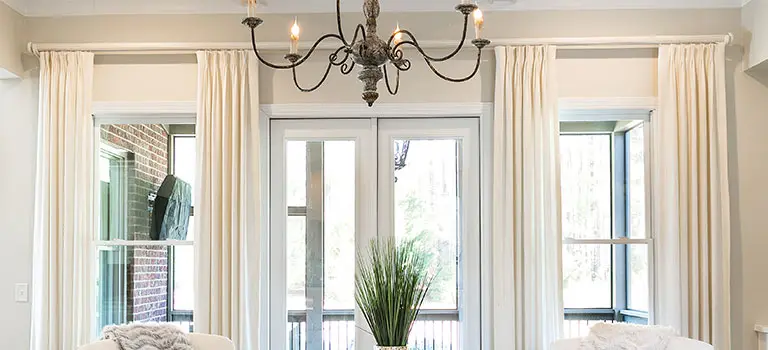
How do the colors look under lamplight?
Lamps change how color reads. Fabric that looks crisp gray in daylight can turn muddy under them. Cream goes yellow. A deep blue can go almost black.
You'll see these drapes closed every winter night from Thanksgiving well into March, so pick the color for night. Test samples after dark. Hold them against the window with your own lamps on. Then sit down on the sofa and look from there. A swatch looks different from across the room than it does in your hand. Check again the next morning, since the shade and open drapes are what you'll see by day.
Texture matters too. Velvet and heavier weaves catch lamplight and look rich when closed, which is most of the evening in January. Linen looks softer and more casual, and it lets a little more lamplight glow through the weave when the panels are closed. Pick the one that fits how dressed up the room already feels.
What to do tonight
Turn on your usual lamps tonight. Then close whatever is on the big window and walk out to the sidewalk. Look at what shows. Then come back in, sit where you always sit and look at the glass. Whichever window bothers you most from those two spots is the one to start with. Bring that one to us when you're thinking about living room window treatments in Brookfield. We'll plan the rest of the room around it.
Kevin Sill is CFO and co-owner of the family-owned Budget Blinds franchises serving Brookfield and Elm Grove.