
A Winter Home Office: Roller Shades in Brookfield WI
The sun that feels so nice at lunch turns into a problem around 3, when it drops low enough to hit your screen sideways. An hour and a half later the same window is dark glass with a lit desk behind it. Roller shades can handle both jobs in a Brookfield home office. Usually that means a solar roller for the afternoon plus something that closes all the way for the evening.
Why does the screen wash out around 3?
By mid-afternoon in late November the sun sits low in the southwest, barely above the rooftops across the street. In summer the leaves and the high sun kept it out of the room, but now it comes in nearly flat. It reaches the far wall and lands on whatever screen is in its path.
Snow adds to it. Once the ground is white, the yard throws light back up at the glass. South and west windows get it worst. An east or north window rarely sees direct sun in the afternoon, so plain light-filtering fabric is usually enough there.
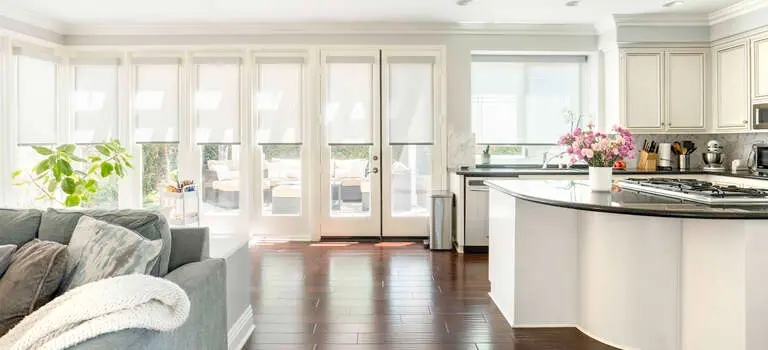
Solar or light-filtering roller shades for an office?
For a south or west office window, I'd pick a solar roller. The weave cuts the glare and you can still see the yard through it.
Let the window's direction set the weave. A south window gets most of its direct sun in the colder months. That's when the sun runs low enough to slip under the overhang. A medium openness is usually enough there. A west window should go tighter, since late low sun is the hardest glare of the day. Roller fabrics run from very tight to fairly open, and the range is on our roller shades page. Every one comes cordless, and a motor can lower them at sunset if you tend to forget.
Light-filtering fabric softens the glare more, but you lose the view while it's down. Save it for a window facing a fence.
The real test is your own screen. We bring samples to the house. Hold one over the office glass close to 3 on a sunny afternoon. Can you read it without leaning in? Then the weave is tight enough. If you're still squinting, go one step tighter.
What happens to the office window after dark?
By Thanksgiving week it's dark by dinner. With the desk lamp on, a solar weave turns see-through (what the street can see after dark). So the job splits in two. By day the solar roller keeps your view and cuts the glare. At night you need a darker layer, and there are two ways to add one.
Drapery is the simple fix if the view matters most. You keep the solar roller exactly as it is and pull drapery layered over the shade closed at dusk.
A dual roller is the other way: a sheer shade and a blackout shade on one window, each moving on its own. The sheer handles the afternoon and the blackout comes down at dark.
If the office faces the street, I'd set up one of the two before winter really sets in.
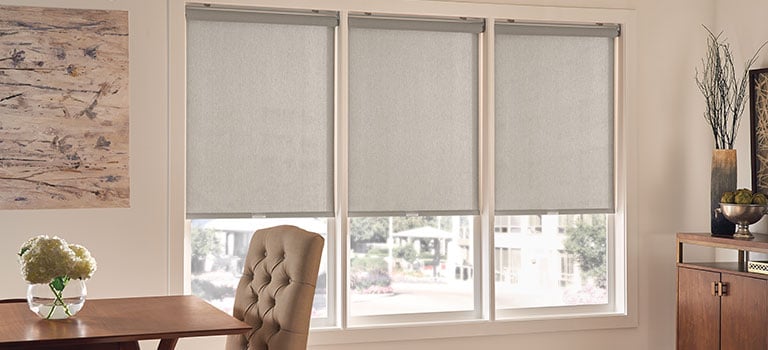
How should the shade sit on an office window?
Small side gaps you'd never notice in a bedroom show up as stripes on a screen. A shade mounted inside the frame leaves a thin gap at each side. With low sun behind it, that gap turns into a bright line across your monitor. An outside mount that overlaps the frame a little blocks most of that.
Look at where the desk sits before you order anything. Sun from behind you lands right on the screen. Sun from the side mostly lands on the wall. If you can turn the desk so the window is at your elbow, the shade has less work to do. You may get away with a more open weave and a better view of the yard.
Two or three office windows on one wall should be ordered as a set, with the same fabric and mount on each. That keeps the wall calm behind the desk. Ask us out about roller shades in Brookfield on a sunny afternoon. If you sit facing the window, go one step tighter on the weave than you think you need. You face that glare all day.
Kevin Sill is CFO and co-owner of the family-owned Budget Blinds franchises serving Brookfield and Elm Grove.