
California Shutters in Fonthill: 7 Checks
Before you order California shutters in Fonthill, check seven things: the material for each room, the width of your biggest window, the louver size, the depth of the window, the way the panels swing, how much of the glass they cover and the date you need them by. Most of it takes a few minutes with a tape measure, and any one of them can change the quote or the finished look.
Fonthill is mainly a residential community in the Town of Pelham, with fruit orchards and nature trails around it, and the homes we go into here run from established family properties to newer builds. So the windows vary a lot from one street to the next. If you've been reading about plantation shutters, that's the same product. Most people around here say California.
1. Match the material to the room and the trim
Shutters come in real wood or vinyl, which you'll also see called poly, and there are composites with a wood core under a poly skin. Vinyl is the safe pick over a kitchen sink, in a bathroom and in the basement, because water doesn't bother it. Wood moves with humidity, and it gets plenty of chances between humid summers, dry furnace heat and condensation on cold glass in January. Then look at your trim. Most vinyl lines come in whites and soft neutrals, so if your house has stained oak or maple woodwork, or you want a colour matched exactly, you're looking at wood. Our guide to California shutters in wood or vinyl goes through it room by room.
2. Measure the width of your biggest window
Run a tape across the widest opening you want covered. Past about a metre and a half, the material starts to affect how the shutter looks, since wood is lighter and its panels can run wider before they sag on the hinges. Vinyl is heavier, so the same opening usually needs more vertical breaks. Every break is one more upright line across the glass, which you'll notice most on the window that looks over your yard, so decide how much that matters to you before you settle on a material.
3. Size the louvers to the window
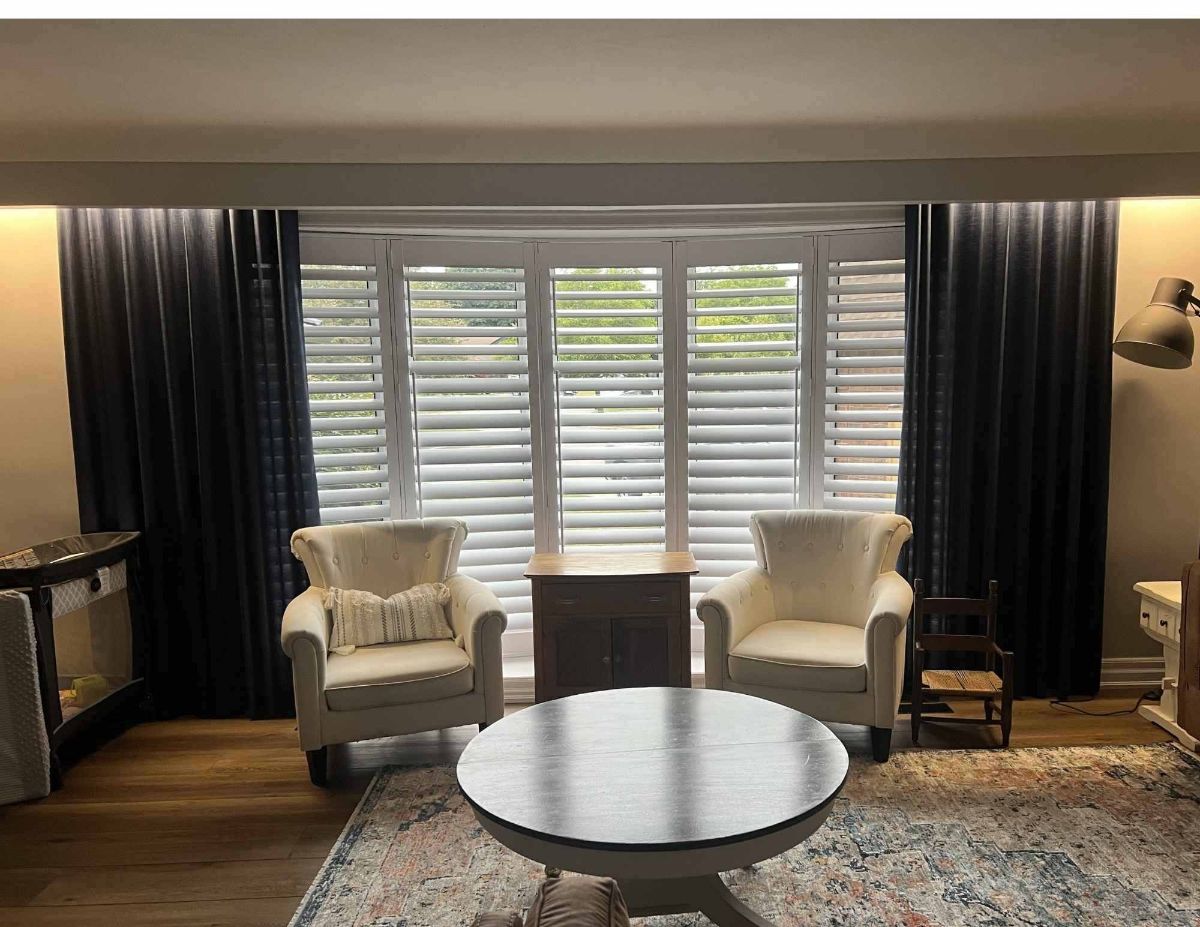
The common louver widths are 2.5, 3.5 and 4.5 inches. Larger louvers read more contemporary, and they give you a cleaner sightline when they're tilted open, so a big picture window usually carries them well. A small casement can look better with a narrower louver, because a wide one takes over a small opening. Most modern homes in the region end up at 3.5 or 4.5, but an older house with smaller windows might be better at 2.5.
4. Look at what's sitting in the window frame
Shutters mount in a frame inside the opening or around it, and the louvers need room to tilt. Open the window and look for anything that sticks out, like a crank handle on a casement, a lock or a sill that sits proud of the frame. None of these rule shutters out, they just affect where the frame goes, and we measure for them at the visit. Bring up any window you've left bare because you assumed it couldn't be done, too. Arched and angled windows get built to their exact measurements, bay windows too, and our post on bay window coverings shows how the angles get handled.
5. Walk the path the panels will swing
California shutters are hinged, so the panels open into the room. Picture each one folding back and see what's in the way: an armchair pushed up to the sill, a floor lamp, the side of a bed, a radiator cover. You don't have to open them fully every day, since most people just tilt the louvers, but you'll want to swing them clear when you clean the glass or open the window. On a patio door, check the handle and the path of the sliding panel as well, because those two set the layout of the whole door.
6. Decide how much of the window they cover
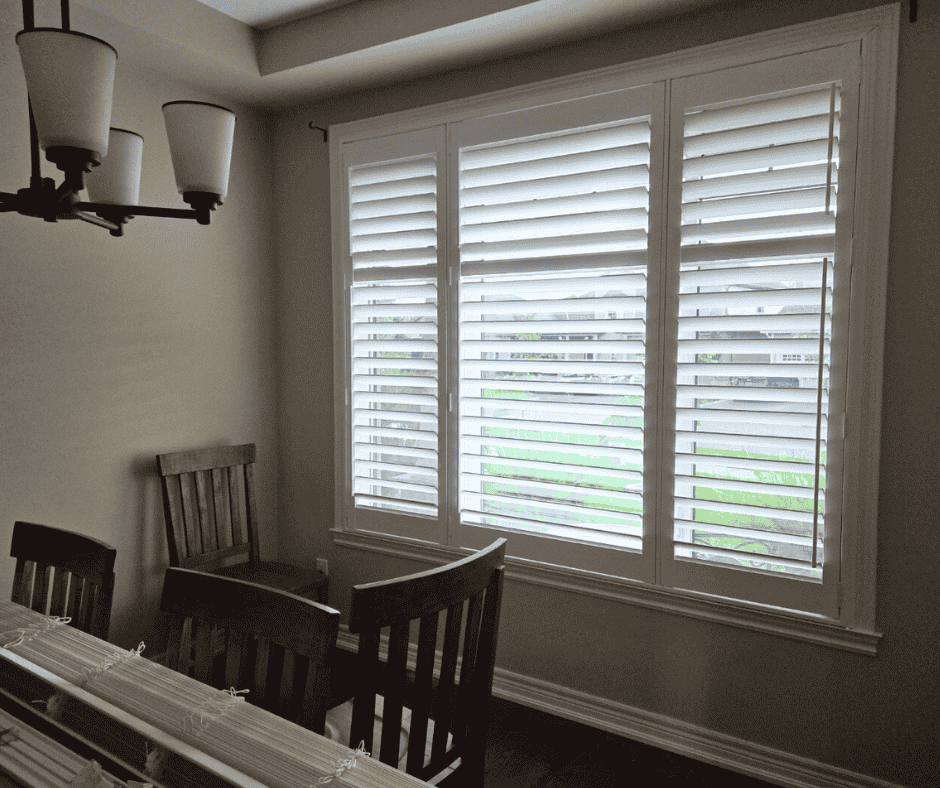
Full height is the usual choice and it suits any room. Café style covers only the bottom half, which gives you privacy at street level and leaves the top of the window open to the light, and it's a popular way to do a kitchen or an eating area. Tier on tier stacks two sets of panels that work independently, so you can open the top and keep the bottom closed. That one suits a front bedroom or a ground floor room close to the sidewalk, where you'd like daylight and don't want people looking in.
7. Count back from the date you need them
Shutters are made to your window sizes, so nothing comes off a shelf. We measure at the first visit, with no second appointment for measurements, and we come back about four weeks later to install with our own installers rather than subcontractors. If you're aiming for the end of a renovation or for family coming to stay, count back from that date. Leave extra room from December to March and in July and August, which are our busy stretches. Every order also comes with free temporary shades.
The seven checks at a glance
| Check | What to look at | What it changes |
|---|---|---|
| Material | Steam, splashes, trim colour | Wood or vinyl |
| Width | Openings past about 1.5 m | Number of vertical breaks |
| Louver size | Scale of the window | 2.5, 3.5 or 4.5 inch |
| Depth | Cranks, locks, sills | Inside or outside frame |
| Swing | Furniture, door handles | Panel layout |
| Coverage | Street-level privacy | Full height, café or tier on tier |
| Timing | Your deadline, busy months | When to book |
What other customers said about their shutters
Neither of these comes from Fonthill, they're two of the shutter reviews on our site. Mike B. of St Davids wrote: "The Niagara team did a fantastic job assisting me in selecting the best possible options with my window coverings. I ended up choosing Norman California shutters and am absolutely thrilled with the results". And Pat & Franca F. of Niagara Falls wrote about theirs: "The white Talento Shutters installed by James are absolutely beautiful. The clean and sleek look has made our space feel open and spacious."
Common questions
Do I need all seven answers before I call?
No. If you've only got as far as knowing which room bothers you, that's enough. We go through the rest at the window during the consultation, which is free.
Should I go with roller shades in Fonthill instead?
It depends on the room. Shutters stay on the window as a fixed feature, while a roller shade disappears when it's raised. We cover that in roller shades in Fonthill, and shutters vs blinds compares the two styles more broadly.
Can I do some rooms now and the rest later?
Yes. Plenty of people start with the living room or the street-facing windows and add others later.
Can wood shutters go in a bathroom?
A well-sealed painted wood shutter in a well-ventilated bathroom can hold up, but it's the riskier choice. Over a tub or a sink we'd steer you to vinyl.
What do California shutters cost?
It depends on the sizes, the material and the number of windows, so we quote it after measuring. Our guide to custom interior shutters explains the choices that move the number.
When you're ready to have someone look at the windows, call (905) 650-3210 or book through our page for custom window coverings across Niagara, and we'll come to the house.