
Cellular Shades on Hilton Head for Cool Mornings and Guests
Cellular shades sound like something you'd buy for a long northern winter, yet two rooms in an island house get real use from them. One is the bedroom you wake up in on a cool winter morning. The other is the guest room that has to go dark for visitors. Those two spots are where I'd put cellular shades on Hilton Head. The wet rooms do better with shutters or faux wood.
What are cellular shades, and why use them somewhere warm?
A cellular shade is fabric shaped into a row of air pockets that look like a honeycomb from the side. Here they mostly take the chill off a cool morning.
Island winters are mild, but the mornings are cool. Winter nights here often drop to around 40, and summer afternoons run in the low 90s. If you keep the heat low overnight, the window is the coldest thing in the bedroom at dawn. A cellular shade helps with that cold glass. In summer the same shade slows the heat that builds up beside a sunny window.
For most island bedrooms single cell is plenty. Double cell makes sense on a west-facing room that bakes through long summer afternoons. You can compare light levels and lifts on our cellular shades page.
A top-down bottom-up lift is worth a look too. You can drop the shade from the top to see the treetops or the marsh while the lower glass stays covered from the path or the house next door. Stop lowering it while the gap still shows only sky and branches from the bed, before the neighbor's windows slide into view.
Paths here get early walkers. The Town's Jarvis Creek Park has a one-mile loop around its lake and opens at 6 a.m. If a guest room faces a path, keep the lower glass covered and let the top bring in light.
The cells also dampen outside noise a little, which helps a guest room near a busy street or a neighbor's pool. They stack up small when raised, so a view window stays open by day. They're a good option for a shallow frame or a French door too.
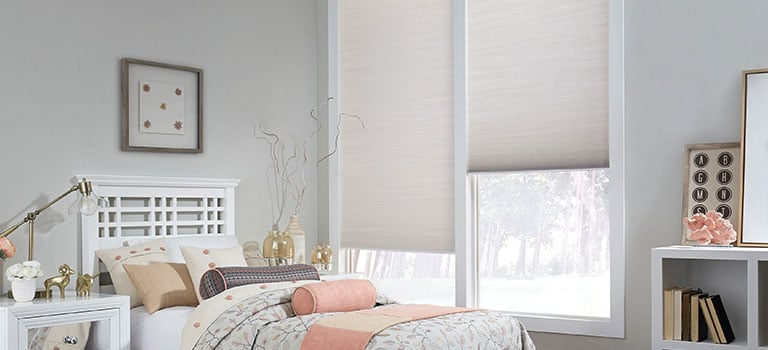
How dark can a guest room get with cellular shades?
Pretty dark, if you set it up right. Start with room-darkening fabric. Then deal with the edges. Set inside the window opening, any shade lets a sliver of light past both edges. Light guards or side channels close that gap. For the darkest guest room, mount it higher and wider than the window so it overlaps the opening.
Think about when your guests come, too. Winter visitors may sleep through sunrise anyway, since the sun comes up late in the cool months. Summer guests are the hard case. Around midsummer the sun is up very early, and an east guest room fills with light long before anyone wants breakfast. Choose the darkness level with those summer mornings in mind. Does the guest room look toward the beach? In sea turtle season the Town asks for blinds or drapes closed at 10 p.m. when indoor lights show on the sand (Town's sea turtle page). A room-darkening shade makes that easy for a visitor.
This is the room where seeing the fabric in place helps most. At a free visit we can hold a room-darkening sample right at the guest room window, so you see how much light gets past it.
Keep the controls simple for visitors. A cordless shade lifts and lowers by the bottom rail, and there's nothing to figure out. For more on controls anyone can use, see easy window coverings for Sun City Hilton Head.
Do cellular shades make sense in a second home?
They can, if your house sits empty for weeks between visits. Plenty do. Census figures for the island show close to 4 in 10 housing units with no one living there as their usual home. The simple plan is to leave the shades down on the sunny sides while you're gone. That keeps the hot afternoon sun off the glass and the floors. A room-darkening cellular shade blocks the most light.
Battery-powered motorized cellular shades take that one step further in a home you're not in every day. You can set them to rise in the morning and come down before the afternoon heat. Then the sunny glass is covered in the hours that matter, even with nobody there. A sun or temperature sensor is another add-on that lowers them on a hot afternoon with no one home. Our post on motorized shades for an Okatie great room has more on schedules and remotes.
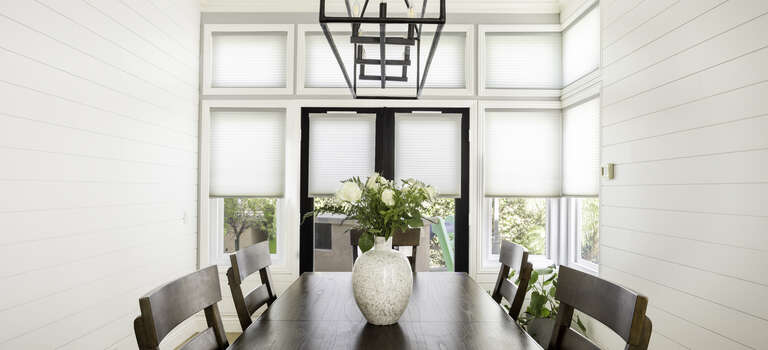
What are the downsides of cellular shades in an island house?
There are a few worth knowing before you order.
The cells catch dust and spring pollen, but a soft vacuum brush or a hair dryer on cool clears them out. It's an easy job, but it's one more thing on the list.
They aren't my pick for wet rooms, where composite shutters or faux wood handle steam better than fabric.
The look is soft and simple. In a living room full of plantation shutters, a cellular shade can feel out of step. I'd use them where shutters aren't already the plan. Bedrooms, guest rooms and an office are good fits.
And a light-filtering fabric won't hide much once the bedroom lamps are on, so pick room darkening for any room that faces the street.
What to look for when you shop for cellular shades
Shop with someone who comes to the house. The light off the water or through the pines can change how a color looks, so a swatch in a store won't tell you much. Ask them to hold samples up to your own windows and to measure each one, edges included.
Start with the guest room. On a bright morning, lower whatever is on that window now and look at the sides. If light runs down both edges, plan side channels or an outside mount along with the new fabric. Tell us what you saw at the edges when you call about cellular shades on Hilton Head or in Bluffton.
Kevin Sill is CFO and co-owner of the family-owned Budget Blinds franchises serving Hilton Head Island and Bluffton.