
Drapes in Madison WI: Which Lining for a Winter Room?
In an older house, the chair by the front window is the one nobody wants in midwinter. The glass is cold and you can feel it from the cushion. For drapes in Madison or out in the river towns, that chair tells you what to buy. It needs a thermal lining and a rod wide enough to clear the glass. A bedroom needs blackout. A room where the panels just frame the view can get by with a plain lining.
Start with what the room does after dark
Ask one question about each window. What happens in this room between dinner and bedtime?
If people sit and talk near the glass, the job is warmth and a softer look. If someone sleeps there, the job is darkness. A front room where the street can see in needs privacy first. And if nobody uses the room much at night, you're mostly buying color and texture.
That answer picks your lining. The face fabric comes after, and almost any of them works in a winter room once the lining is right. A heavy weave looks formal. A loose one looks relaxed and lets light glow through when it's unlined.
Overnight guests make the answer clearer. When family stays over the spare room that sits empty most of the year turns into a bedroom. The dining room gets used after dark for hours too. Walk through the house with that in mind before you order anything, and note which rooms will have someone in them after dark.
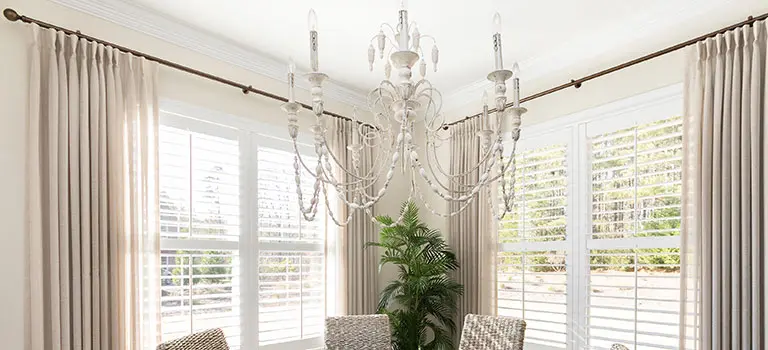
Standard, thermal or blackout lining: which do you need?
Lined panels come with one of three linings, and you'll find all three on our drapes page.
Think of the standard lining as a backing sheet. It makes the panel hang fuller and saves the face fabric from fading. It won't do much about cold or light, so I'd save it for a living room where the drapes stay open most of the time.
The thermal lining is a thicker layer sewn to the back, and it's the one that does the most in winter. Winter nights in Madison often drop into the teens (State Climatology Office). On a night like that, old single glass gets cold enough to feel from your chair. A thermal panel closed over it keeps more of that chill at the window. Put it on the original windows of an older house first.
The blackout lining is for sleep and screens. It stops nearly all the light that hits the fabric. Light can still slip around the edges. Give it a rod that reaches past the frame on both sides.
A lined panel also covers the room at night, where an unlined one is a daytime layer only (what light-filtering fabric shows at night). People walk the Great Sauk State Trail after dark, so a back window that faces it needs a lined panel.
How long should drapes hang?
I like panels that just touch the floor, because they look finished and don't drag when you open them every day. A puddle of extra fabric on the floor belongs in a formal room where the drapes rarely move.
Panels made to an exact length are measured at each window. If your house is old enough to have settled, the floor under one window may not match the next.
Where should the rod go on a river window?
Open drapes should stack on the wall beside the window, which keeps the glass clear and the room bright. Mount the rod a few inches above the trim and the window looks taller too.
The DNR's eagle page says eagles gather on the open Wisconsin River near Sauk Prairie in winter and are easiest to spot in early morning. If your back windows look toward the river, that's a view to keep at breakfast. Give that window a rod long enough for the open panels to clear the glass completely.
I match the rod to the door handles. Black handles get a matte black rod. A traverse rod lets heavy lined panels glide without tugging.
In an older brick or plaster house, the brackets need solid wood behind them. Plaster alone won't hold a heavy lined drape for long. Wide wood trim often gives you a good spot, and brick walls take more care.
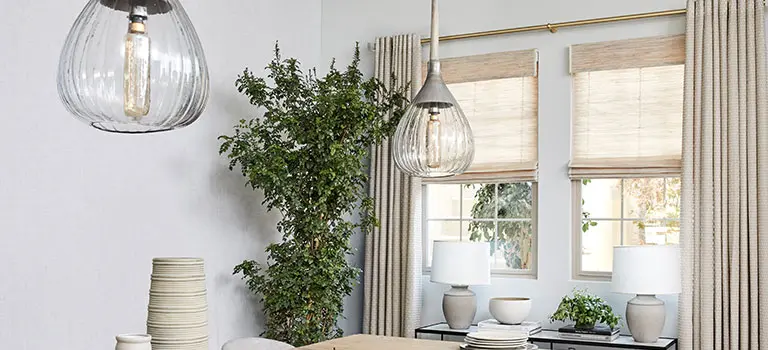
Can drapes go over the shade you already have?
Most of the time you can keep the shade. If you already like the shade or blind in the window, keep it for daytime light and privacy. Add drapes on a rod mounted above and outside the frame. The shade handles the day, and the drapes close over it at night. Our post on a Madison guest room that doubles as an office pairs a blind with a blackout-lined drape that way.
A shade mounted inside the frame leaves room for drapes in front of it. One mounted on the wall outside the frame may need a rod with a deeper bracket so the panels clear it. If the shade is a Roman, the drape can frame it instead of covering it. Our Roman shades post for Middleton Hills shows that look.
Pick a header that slides if the panels will open and close every day. Pleated and ripplefold headers glide. Save the fixed styles for panels that never move.
For a very wide window or one you can't reach behind a sofa, motorized drapes run on a ceiling or wall track. One button opens the whole window in the morning.
Picking drapes window by window
The bedroom gets blackout lining on a wide rod. The chair by the drafty window gets thermal. The dining room gets the most use when family comes to stay, and it can go either way. Lined panels give it privacy at dinner and a warm look from the table. Rooms where the drapes stay open can use standard lining and your favorite fabric.
The one number worth getting yourself is the bare wall on each side of your main window. With a foot or more, the drapes can stack fully off the glass. With only a few inches, plan on a narrower stack or a shade that does more of the work. Those two numbers settle the rod, and the rod settles how the drapes in Madison will look. Call us once you have them.
Kevin Sill is CFO and co-owner of the family-owned Budget Blinds franchises serving the greater Madison area.