
Roller Shades in Rochester MN: Single or Dual for Winter?
The first thing to settle with roller shades in Rochester is one shade or two. For a bedroom that has to be bright on a Saturday morning and dark by bedtime, I'd go with two. A dual roller puts both on one window, and each one moves on its own. A guest room or a den has only one job, and a single shade does fine there. It sits slimmer in the frame too.
What a single roller shade does well
A single roller is a length of fabric on a tube at the top of the window. Pull it down and it covers the glass. Push it up and it's gone. The fabric can be almost anything, from a sheer that keeps the yard in view to a blackout that stops light coming through the cloth.
You only get one fabric, though. A light-filtering weave keeps the room soft and bright with the shade down, but it never gets dark. Blackout makes the room dark every time it's lowered, which feels great at night and gloomy at two in the afternoon.
So a single roller works best where you can name one job. A guest room that sits empty most of the week only needs dark for the nights someone stays over. A den or home office needs glare control during the day and not much more. A stair window just needs to look tidy. There, a second shade is just bulk.
Single rollers come cordless or motorized like the rest of our shades, and the fabrics are on our roller shades page.
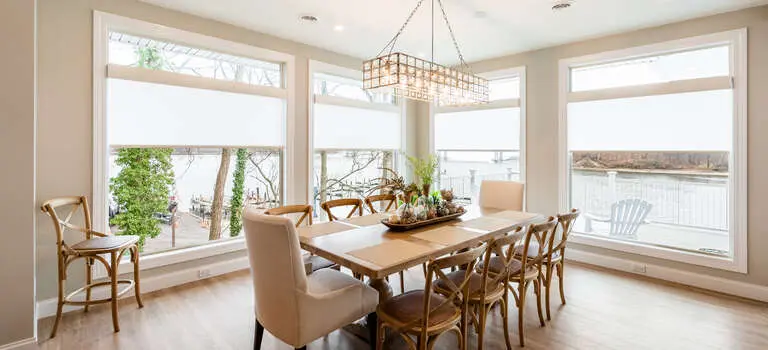
How a dual roller handles day and night
A dual roller stacks two shades at the top of one window, one behind the other. One shade is sheer or light filtering, and the second is blackout. You lower whichever one fits the hour, or both.
On a winter Saturday, you raise the blackout once it's light out and leave the light-filtering shade down. The room fills with soft daylight, and anyone outside sees only the fabric. At noon you raise both for full sun. When the afternoon fades, the blackout comes down and stays there until morning.
Snow changes the mornings too. After a fresh snow, a sunny morning can feel bright through a light-filtering shade alone. That's when the blackout layer helps in a bedroom.
There are a few tradeoffs. We check frame depth at the visit. A shallow frame may mean mounting the dual roller outside it, on the trim or the wall above. Blackout fabric inside the frame also lets a thin line of light in at the sides. Side rails close most of that gap if the room has to be really dark. You'll also have two shades to run, which some people love and some forget about by February.
Light filtering vs blackout when the days are this short
Around Kasson and Dodge Center the sun is down by about 4:40 in late November. Most workdays end in the dark.
That changes the routine. In June you'd use the light-filtering shade from breakfast to bedtime. In December the blackout is down from late afternoon until morning, and the lighter shade only gets a few short hours. That's why a single light-filtering roller can feel like the wrong shade for most of a winter evening.
A bedroom that faces the street gets the most out of the blackout layer. It closes the room off from the sidewalk once the lamps are on. That's true even if nobody in the house needs a dark room to sleep. The city has also been swapping its old orange sodium streetlights for white LEDs, as Med City Beat reported. White light from a streetlight comes through a light-filtering roller at night. A bedroom that faces one is a good place for the blackout layer.
Kids' rooms are the next place for one. A weekend nap at 1 o'clock needs a dark room in the middle of the day, and the post on blackout shades for Rochester day sleepers covers the side gaps that matter then. You drop the blackout for the nap, then go back to the lighter shade when they're up.
Single or dual, room by room
A typical house sorts out like this.
| Room | Pick | Why |
|---|---|---|
| Primary bedroom | Dual roller | Soft light in the morning, dark at night |
| Kids' room | Dual roller, plus side rails if naps matter | Naps by day, privacy after dark |
| Guest room | Single blackout | It only has to be dark when it's used |
| Living room facing the street | Dual roller | Daylight with privacy, then full cover at dusk |
| Den or home office | Single light filtering | Glare control during work hours |
The living room is where people hesitate, because blackout in a family room can sound heavy. Picture the front window at 5 on a December evening with every light on and nothing over the glass. The whole street can see the couch. The blackout layer closes that off. By day it sits rolled up behind the lighter shade where you'd hardly notice it.
A row of windows on one wall should get matching shades, with the same fabric and the same mount on each. That keeps the row looking tidy from the couch and from the street.
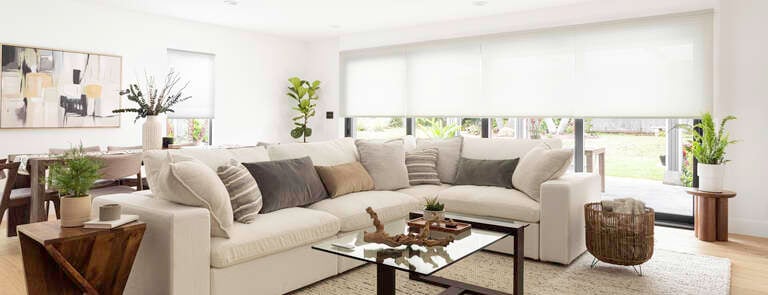
Are roller shades warm enough for a Rochester winter?
Rollers help a little with cold, but they aren't the warmest shade. A roller is a flat layer of fabric, so it only slows the chill a bit. If a bedroom window feels cold from the pillow in January, look at an insulating shade first. The post on shades that hold heat in northwest Rochester homes walks through those. If the room is more about light than cold, a roller gives you the cleaner look.
Side rails seal the edges, so a kids' room with rails is the one to watch in January. If frost shows up on the inside of that glass, the frost myths post for Rochester windows explains what to do.
What to check before you pick a roller
With rollers, the fit and the fabric matter more than the brand. Ask to see the fabric with a lamp behind it, since that's when a light-filtering weave shows its limits. Ask how the shade will sit in your frame and whether the sides will leak light. Ask who you'd call if a shade starts rolling crooked. Our own team installs every order, so with us that call comes back to the same people.
If I could put only one dual roller in a house, it would go in the bedroom that faces the street. A single shade does the job almost everywhere else, and it sits cleaner in the frame. When you want help sorting the rest, we'll come out and talk through roller shades in Rochester one window at a time.
Kevin Sill is CFO and co-owner of the family-owned Budget Blinds franchises serving Rochester and southeast Minnesota.