
Wood, Faux Wood or Mini Blinds in Mount Vernon Homes?
The usual mistake with blinds in an older house is picking the wood first and checking the frame later. Wood blinds suit the living room and dining room, where stained or painted trim is part of the look. Faux wood takes the kitchen and bath. Aluminum mini blinds fit the small and shallow spots the other two can't. Shopping for blinds in Mount Vernon? Check each frame's depth first and pick the material second.
What kinds of windows do older Mount Vernon houses have?
Most of the houses on the city preservation commission's Ash Park walking tour are more than a century old. A frame that age may be shallow or a little worn. Check it before you pick a blind. The tour also points out bay windows, which need a plan for every pane. It notes narrow paned windows tucked into gable ends, and those small openings are where a mini blind earns its place.
Brick and wood frame treat a blind very differently. Brick is the easy case. The window often sits in a deep opening, and almost any blind fits inside it. In a wood-frame house from around 1900, the space between the inner trim and the sash can be much shallower. A blind that fits easily in one house can bump the glass in the other.
The bigger plan for these old windows is in our post on window treatments for older Mount Vernon homes. If you'd rather have louvers on the tall sash, the plantation shutters guide for older houses covers them.
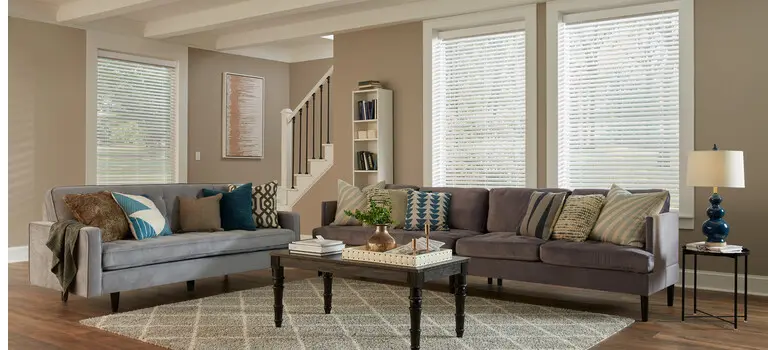
Wood, faux wood or mini blinds: how do they compare?
All three come cordless. All three tilt for light and privacy.
| Blind | Where it does best | Watch out for |
|---|---|---|
| Wood | Living and dining rooms, next to stained or painted trim | Steam, splashes and a hot sunny sill can warp it over time |
| Faux wood | The rooms where water flies, plus laundry and the back door | Set colors only, so compare them to the trim |
| Aluminum (mini) | Small, shallow or narrow windows and gable windows | A plainer look next to fancy trim |
If you want the blind to match your trim exactly, that's wood. Finishes run from painted to stained to rustic, and we can color-match them to your trim. You can pick a 2 inch slat, a 2 3/8 inch slat or a 2 1/2 inch slat. On a tall and narrow window the 2 inch one usually looks right. A routeless wood blind has no holes through the slats for the lift, so it blocks more light when closed. Weighing a fabric shade for a front room with good trim? Our Roman shades or wood blinds post puts the two side by side.
From across the room, most people can't tell faux wood from painted wood. Steam doesn't bother it, which is why it goes in the kitchen and bath. It comes in 2 or 2 1/2 inch slats.
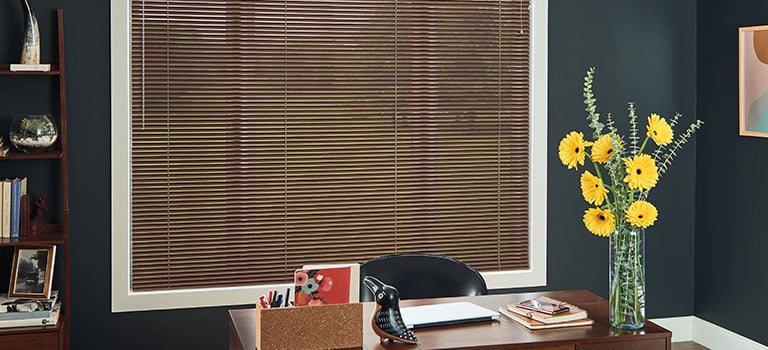
Aluminum blinds are the ones people call mini blinds. They're light and easy on old frames. The slats come as narrow as 1/2 inch, which matters in a shallow opening. A small gable window or a tiny bath window often takes a mini blind when nothing else fits inside. Their coated slats hold up to damp air and dust.
Should inside mount blinds be flush?
Flush looks best when the frame allows it. The front of the blind lines up with the front of the frame, and nothing sticks out past the trim.
The catch is depth. A blind needs room for its headrail and for the slats to turn without hitting the glass or the window locks. In a brick house with deep openings, flush is usually easy. In an old wood-frame house, the blind may sit a little forward of the frame.
A touch forward is fine. The blind still works well and looks straight from across the room, especially with a valance across the top. If it would stick out a lot, try a narrower slat first. A 2 inch faux wood blind may not fit where a 1 inch aluminum blind tucks right in. We check the depth of every opening at the visit, so you'll know which blinds fit.
When does an outside mount make more sense?
Sometimes the window just isn't built for an inside blind. An outside mount hangs above the frame and covers the whole opening.
It's the better fit in two cases. One is a frame that's too shallow even for a mini blind. The second is a bedroom where you want less light at the edges. An outside mount covers the gaps around the sash, so it blocks more light.
The trade is the trim. Mount over it and you hide part of the woodwork, which is often why people bought an old house. So I'd only go outside on the windows that need it. Keep the rest inside so the trim still shows.
A bay works best as a set. Give every pane its own inside-mounted blind in the same material and slat size, so the three sides read as one window.
Which blind goes in which room?
Wood goes where the trim shows, and faux wood goes where water does. Aluminum takes the small shallow spots. Our room-by-room guide to blinds in Marion walks through each room in winter light.
In most older houses I'd save real wood for the front room and the dining room, where the trim and floors are on display. The rest of the house rarely needs it. Ask us to look at your old frames when you're weighing blinds in Mount Vernon.
Kevin Sill is CFO and co-owner of the family-owned Budget Blinds franchises serving the Cedar Rapids and Marion area.